 Reminder for important dates
 Create an address book for recipients
 Faster sending of Fleurop-Greetings
 View past orders























International Women's Day
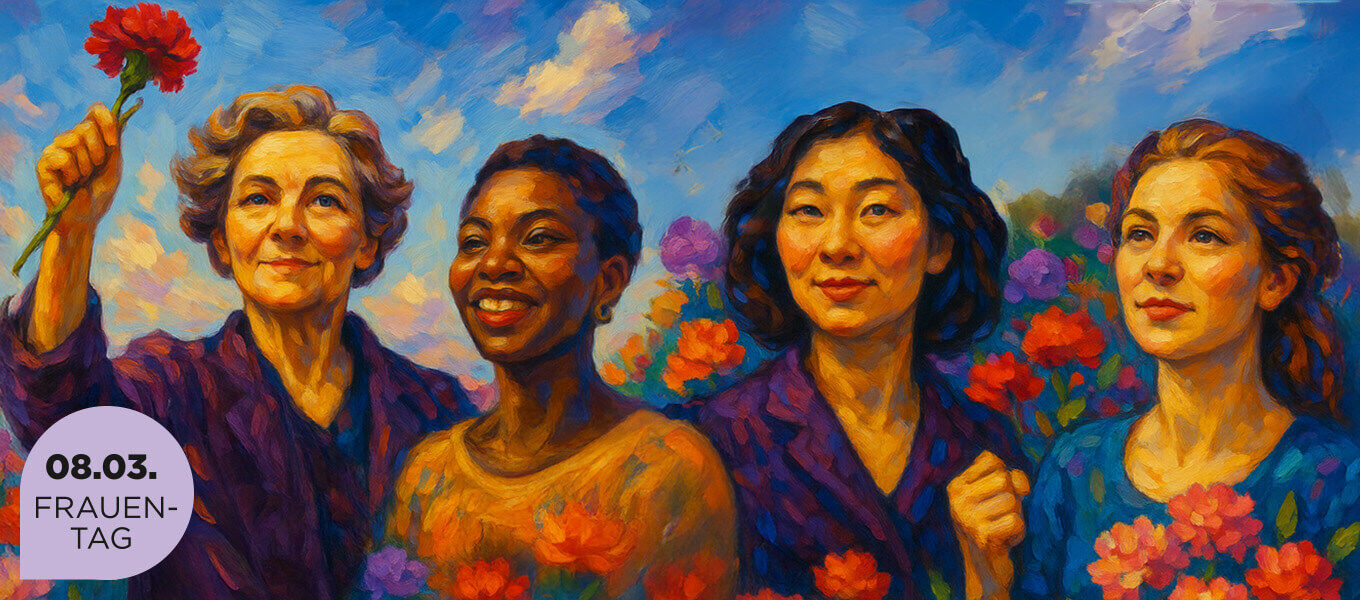

International Women's Day on 8 March originated at the beginning of the 20th century from the struggle for suffrage, fair pay and better working conditions. What began as a protest back then is still highly relevant today. Issues such as equal pay, the unequal distribution of care work and women's financial independence continue to shape our society. Women achieve tremendous things every day – at work, in their families and in their social interactions – but these achievements often remain invisible.
Women's Day is therefore more than a symbolic day of remembrance. It is an invitation to look, listen and show appreciation.
Show appreciation with flowers
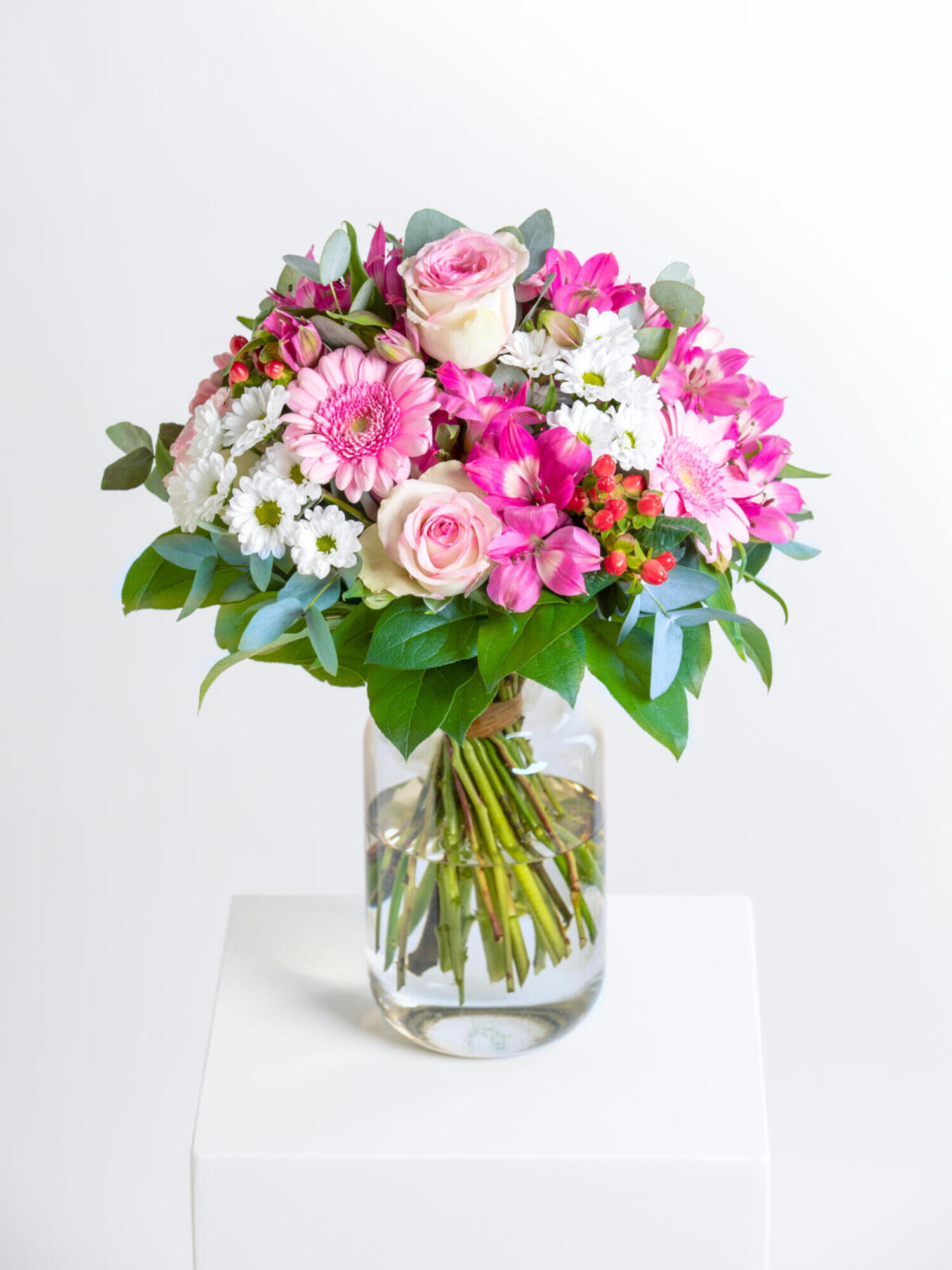
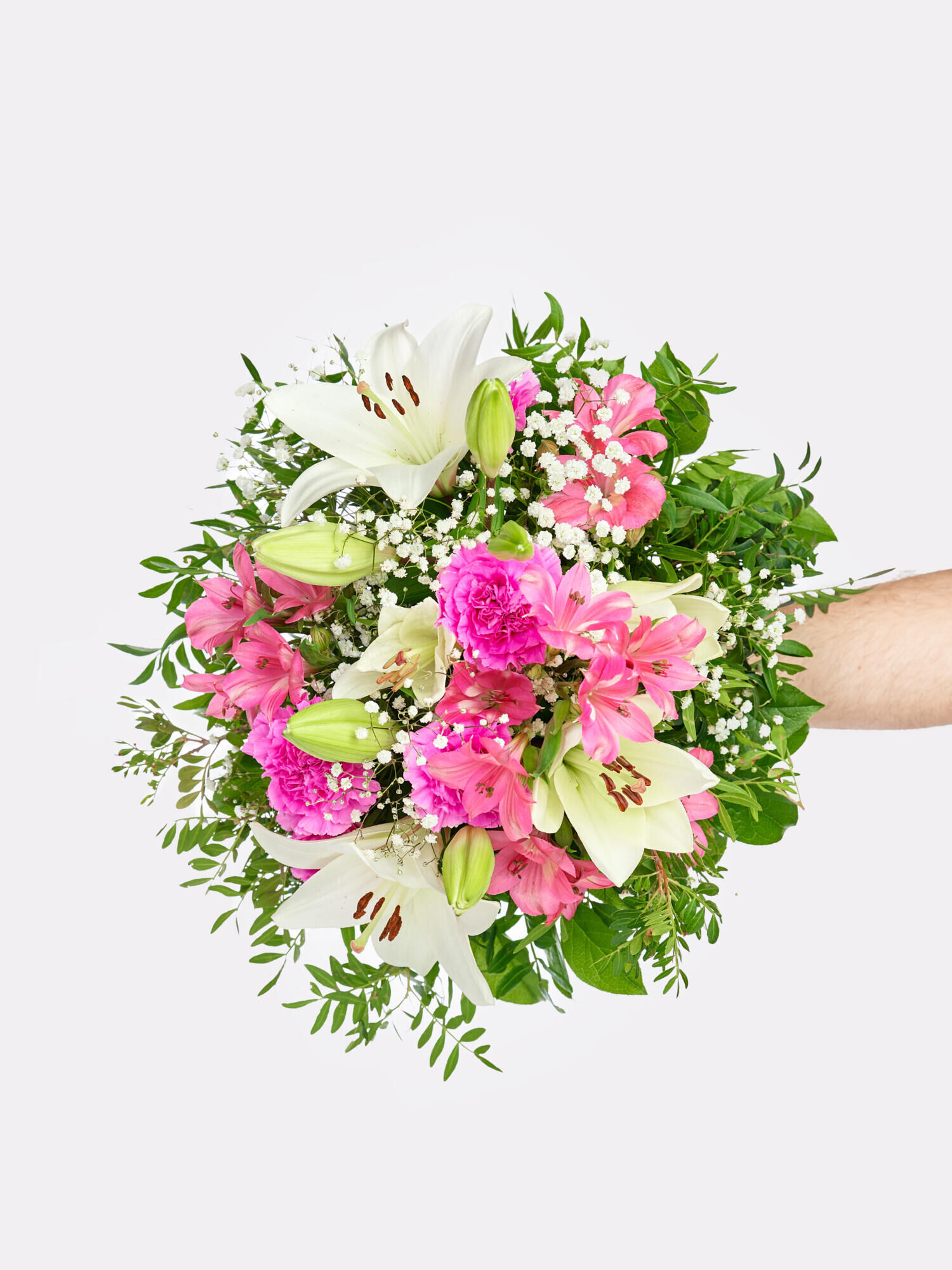
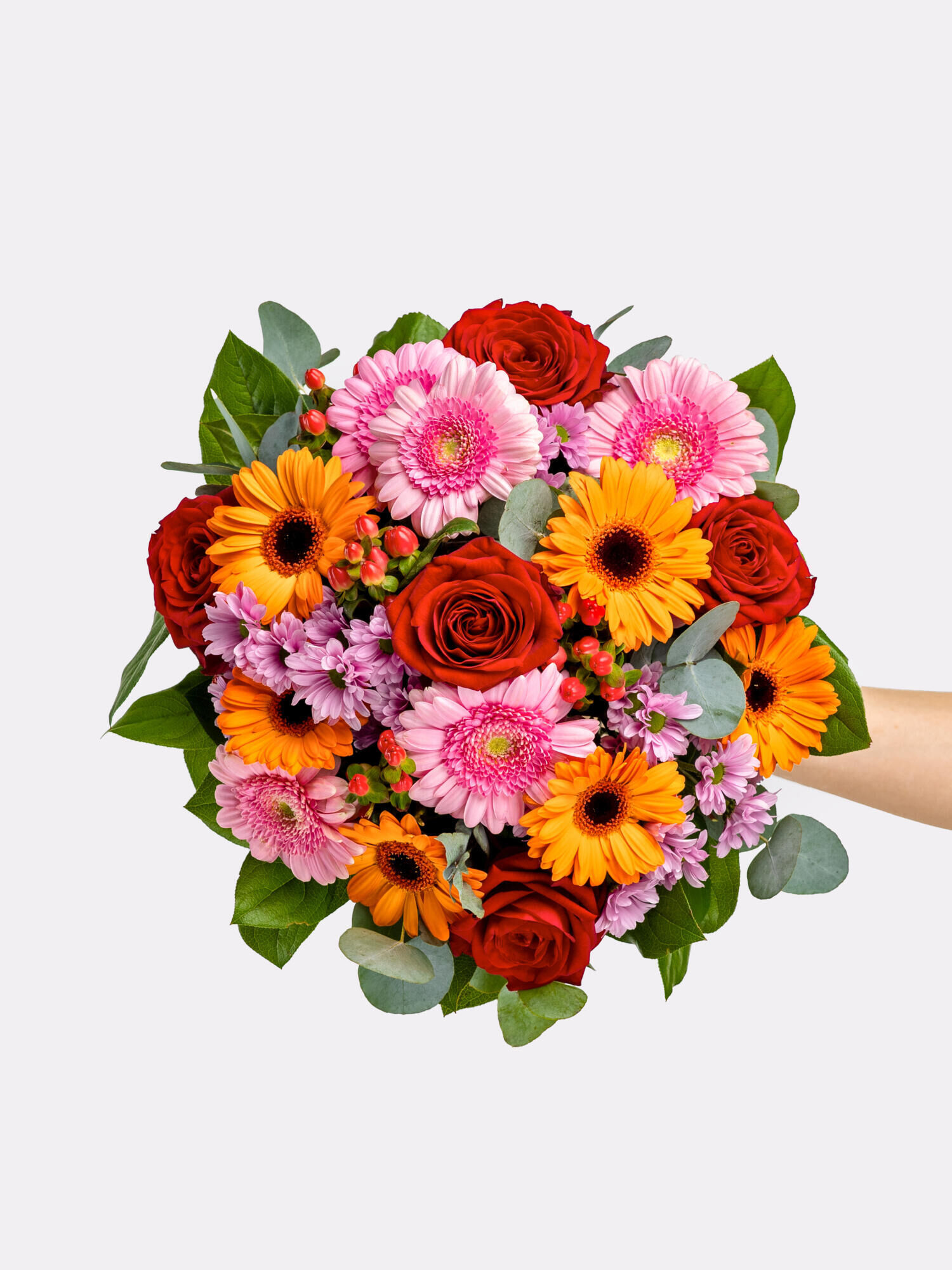
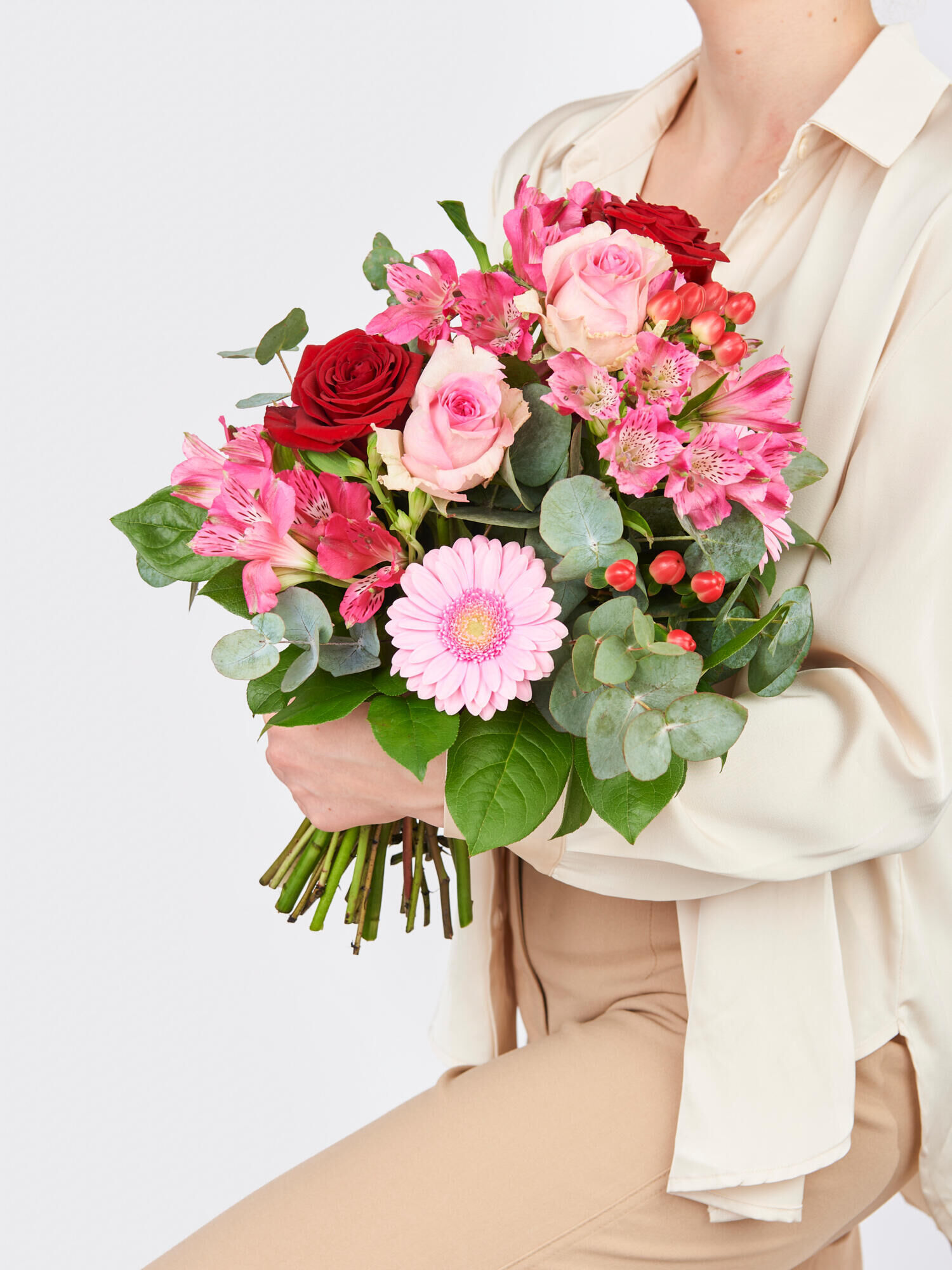
Although the value of Women's Day for society has changed over time, the pleasant gesture of surprising women with a floral greeting on this day has endured for many decades. In many places, friends, sisters, work colleagues or other strong women are surprised with flowers to say thank you.
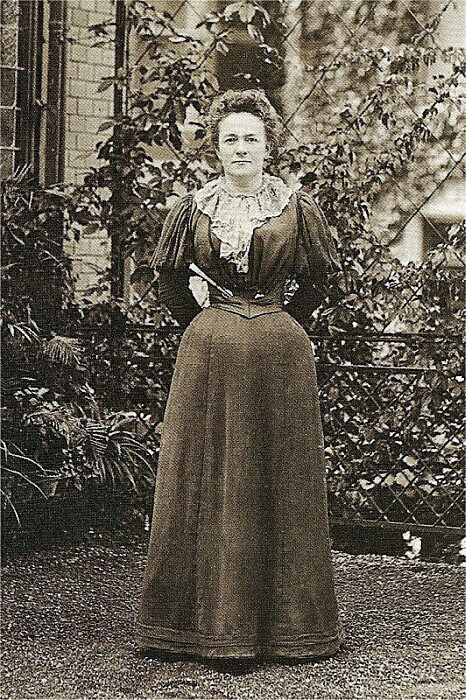
International Women's Day has its origins in the early women's movement of the 20th century. It was first celebrated on 19 March 1911 in Denmark, Germany, Austria-Hungary and Switzerland. The day of action was initiated by German socialist Clara Zetkin, who proposed the introduction of an international women's day at the Second International Socialist Women's Conference in 1910. The aim was to establish a common day of struggle for women's suffrage and equality between women and men.
It was a success: in 1918, women in Germany were granted the right to vote and stand for election. Since 1921, Women's Day has been celebrated annually on 8 March – with the overarching goal of promoting equality between women and men in all areas of society.
The history of Women's Day is closely linked to political upheavals. During the Nazi era, it was banned because of its socialist connotations. After the Second World War, 8 March developed differently in the divided Germany: in the GDR, it was reintroduced early on and celebrated for a long time with a strong state influence, while in the Federal Republic it initially lost importance.
It was not until the new women's movement emerged in the late 1960s that Women's Day regained greater public awareness. An important milestone followed in 1977, when the United Nations officially recognised 8 March as International Women's Day to draw attention to the continuing discrimination against women worldwide.
To this day, Women's Day is actively celebrated in Germany – especially in the new federal states – both in private and at work. It remains an important day to honour achievements and at the same time draw attention to existing inequalities.
Fleurop sets an example: statues of women with flowers for Women's Day
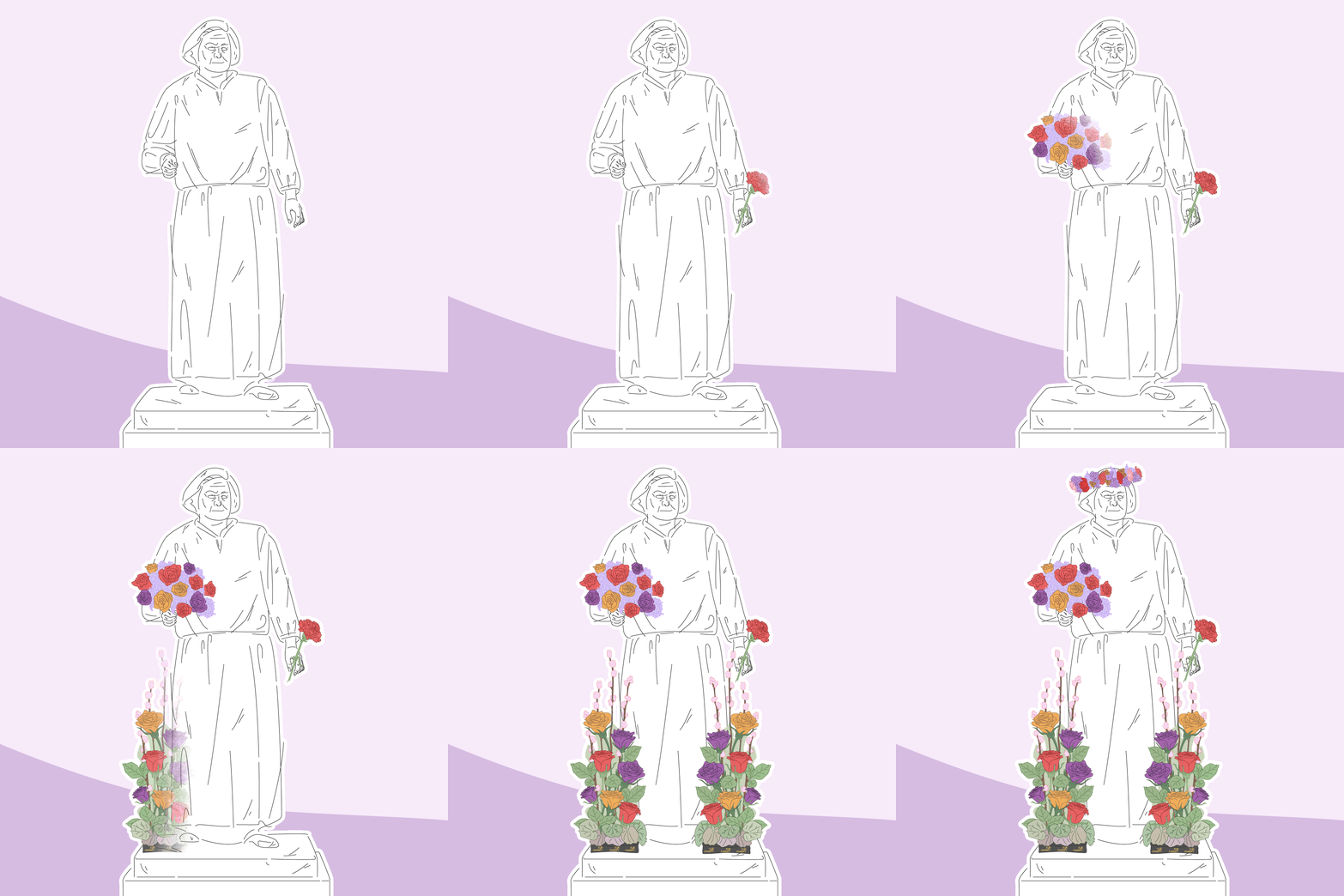
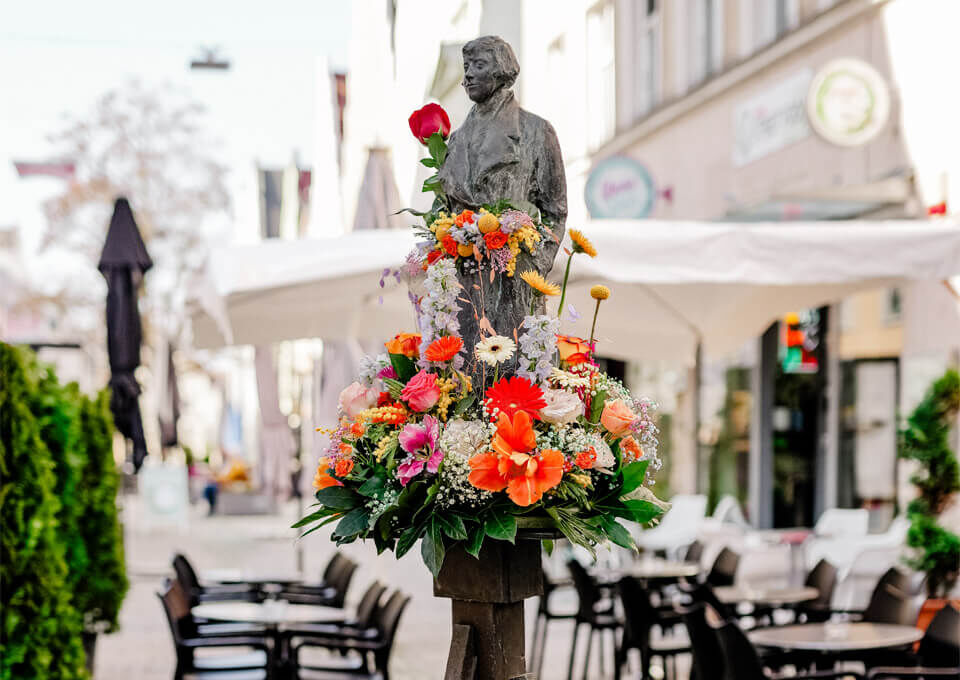
In 2026, we will once again be sending a conscious message of appreciation on International Women's Day. As in 2023, 2024 and 2025, Fleurop florists across Germany will be decorating statues of women with flowers – thereby highlighting women whose achievements have shaped our society. This year, the campaign will begin in the week before 8 March and continue for several days around Women's Day.
This is because our cities still tell mainly male stories. Women are significantly underrepresented in public spaces, and their achievements often go unnoticed. With floral gestures, we are putting these women in the spotlight. Flowers become a sign of recognition, remembrance and respect.
We will decorate the following statues of women in 2026
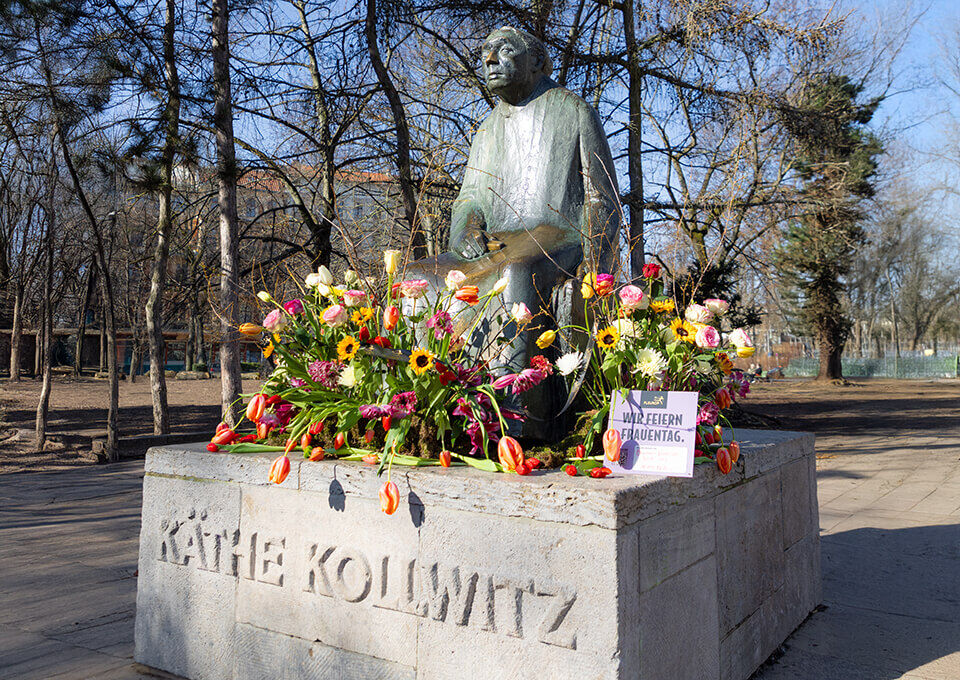
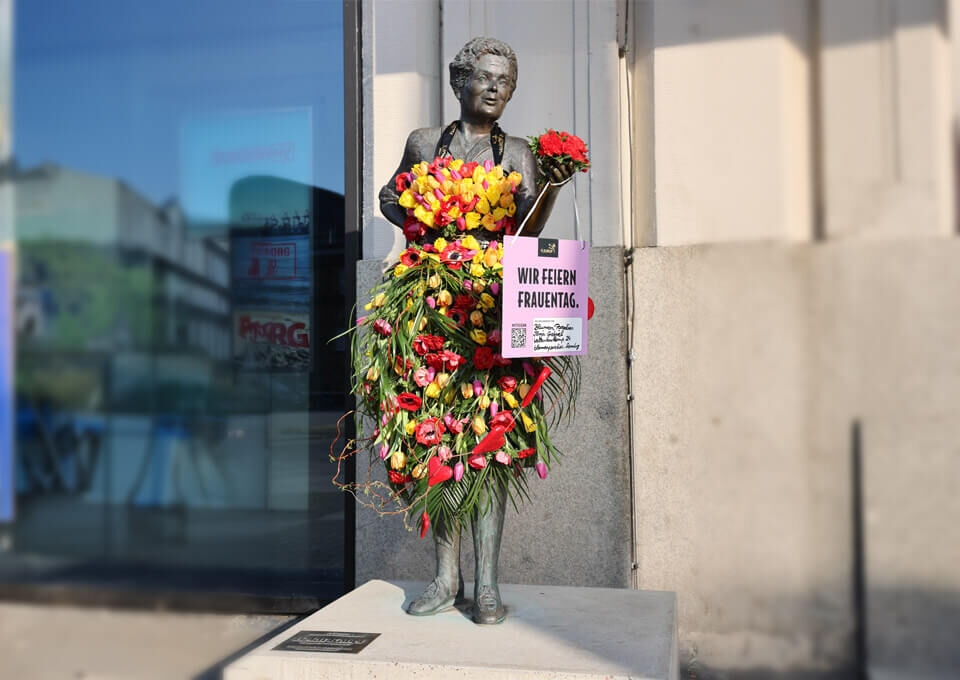
Berlin: Käthe Kollwitz
Will be decorated on: Sunday, 01.03.2026
Käthe Kollwitz (1867-1945) was one of the most famous artists of the 20th century, best known for her depictions of social misery, war and human suffering. She used her art to protest against social injustice and her ability to depict profound human suffering without diminishing the dignity of her figures makes her work universal and timeless. Her most famous work: the cycle "A Weaver's Revolt" shows poor weavers fighting against their exploitation.
Decorated by: Andys & Monas Blumentraum, Blumen Vanessa
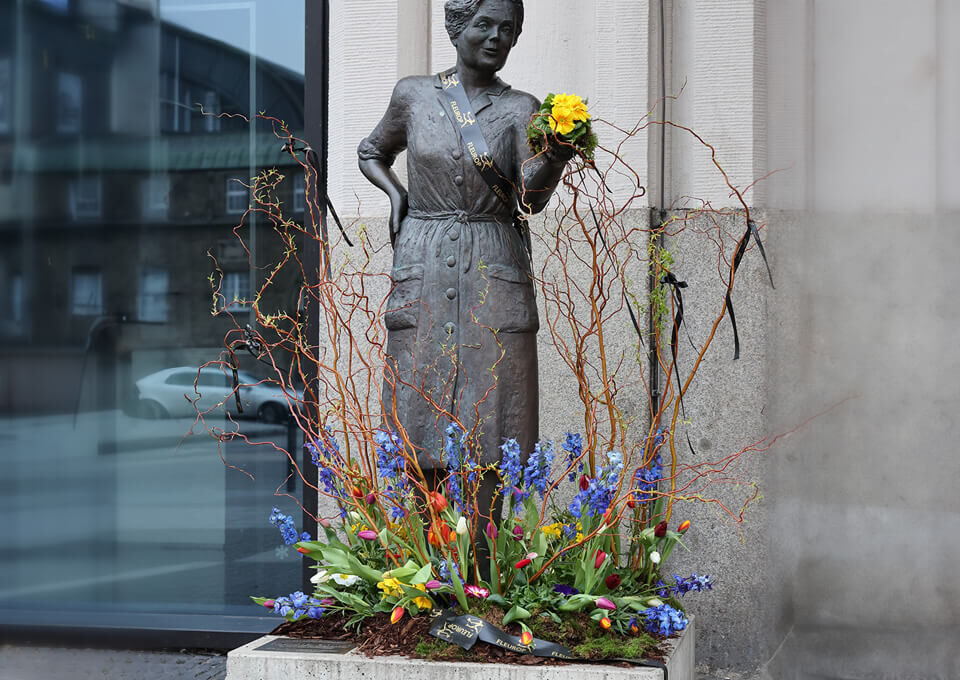
Hamburg: Heidi-Kabel-Statue
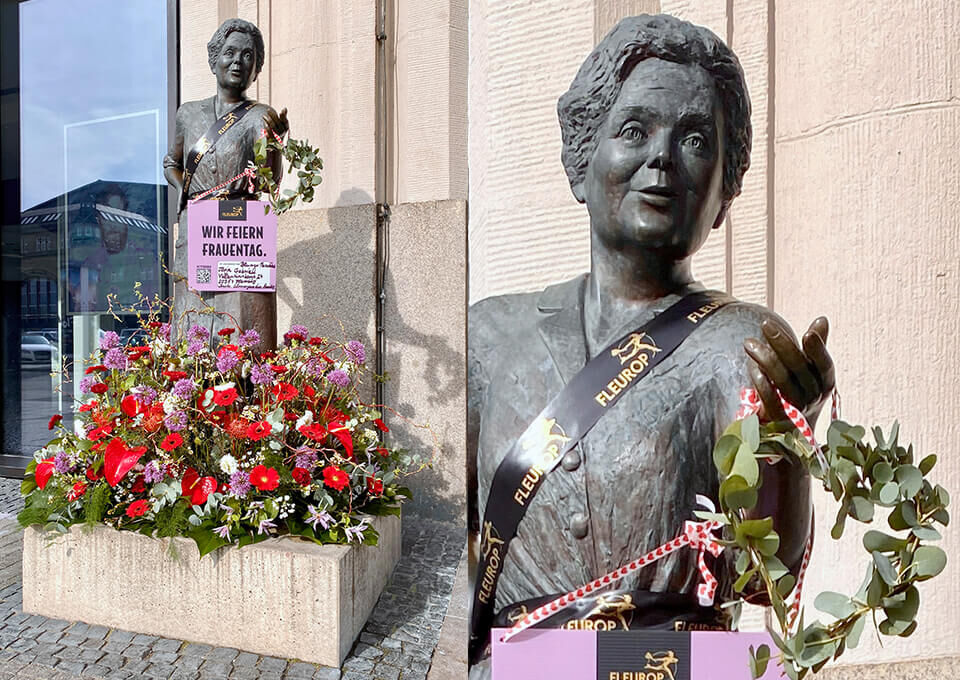
Will be decorated on: Monday, 02.03.2026
Heidi Kabel (1914-2010) was a folk actress at the Ohnsorg Theatre in Hamburg for 66 years, a film actress, singer and radio play narrator - in particular, she made Low German ready for the stage. She was particularly appreciated for her portrayal of strong, down-to-earth female characters. She was also known for her social commitment to the socially disadvantaged. She received numerous awards for her life's work, including three Bambis. Her warm-heartedness, her commitment to the community and her artistic work made her a legendary figure in German popular theatre.
Decorated by: Gabriel Tanja - Blumenparadies
Hamburg: Zitronenjette
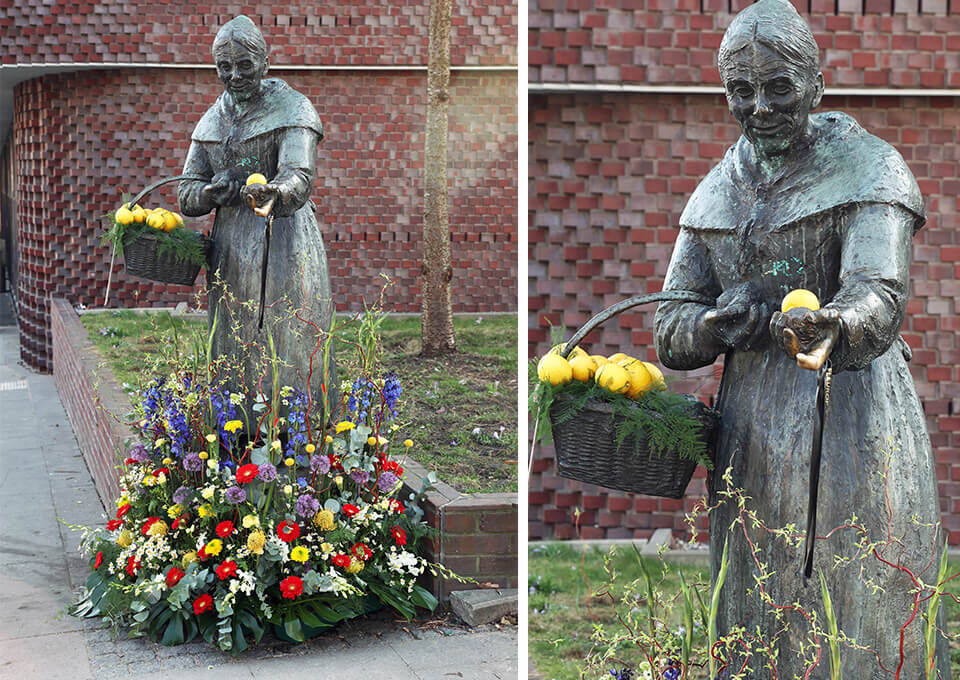
Will be decorated on: Tuesday, 03.03.2026
Born Henriette Johanne Marie Müller in Dessau in 1841, the Zitronenjette was a well-known trader in Hamburg. From the age of 13, she roamed the streets of Grasbrook and the pubs of St Pauli with fresh lemons. Her cry of ‘Zitroon, Zitroon, fresh Zitroon!’ made her a popular figure. In 1986, a monument was erected in her honour in Hamburg. It shows her in her typical pose, her hand outstretched. The bronze hand has now been touched so often that it shines - a gesture that is said to bring good luck. Zitronenjette remains unforgotten as one of Hamburg's originals, a symbol of the lives of ordinary people who struggled through life with their daily hardships.
Decorated by: Gabriel Tanja - Blumenparadies
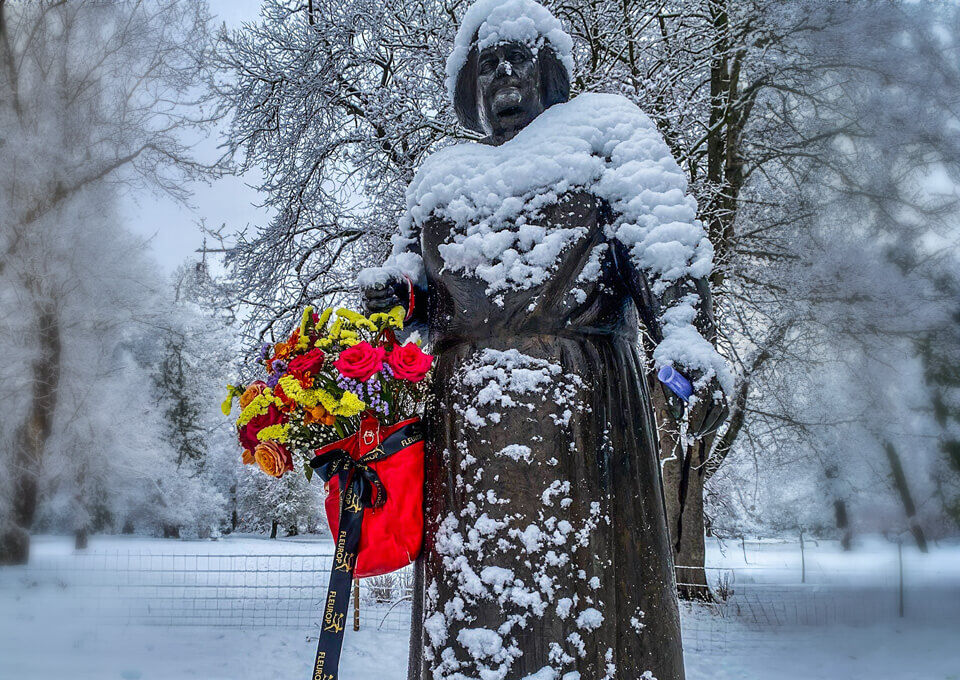
Leipzig: Clara Zetkin
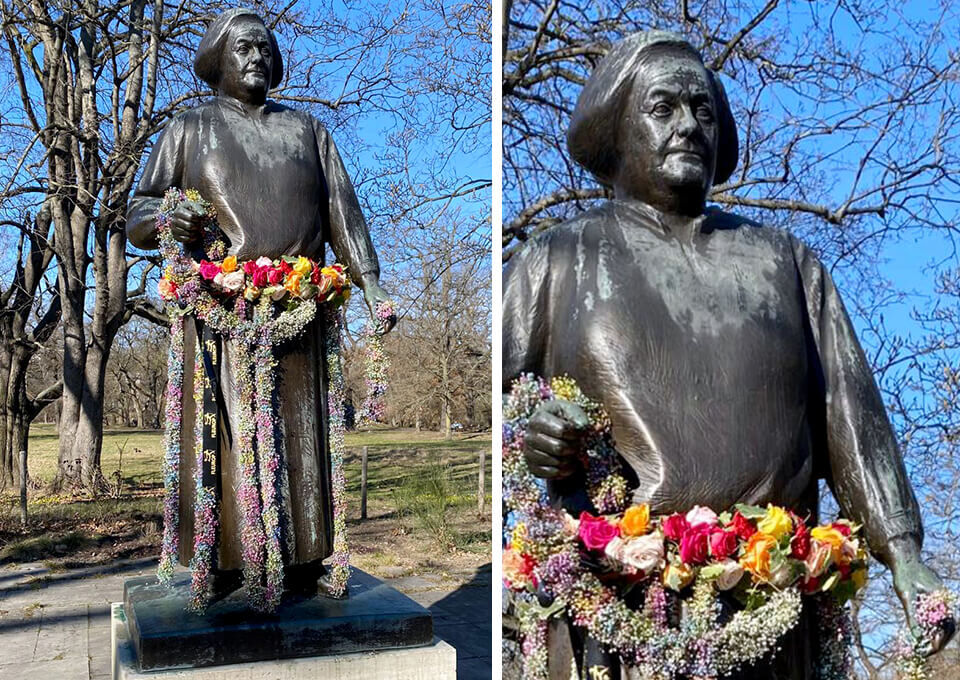
Will be decorated on: Wednesday, 04.03.2026
Clara Zetkin (1857-1933) was a socialist and women's rights activist who spent her life campaigning for equality, workers' rights and international peace. She played a central role in the international socialist movement and was instrumental in the founding of International Women's Day on 8 March, which was first celebrated in 1911. She was convinced of the need to combine the fight for women's rights with the fight for social justice and against capitalism. Clara Zetkin remains a source of inspiration for feminist and socialist movements worldwide to this day.
Decorated by: Blumenhaus Stopp GmbH
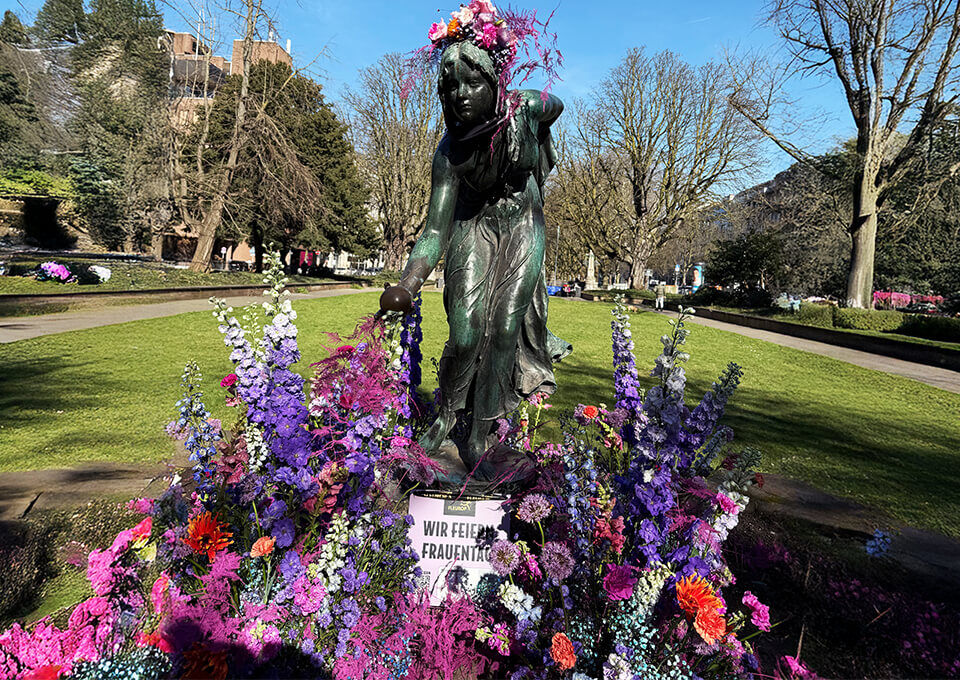
Düsseldorf: Ball player
Will be decorated on: Wednesday, 04.03.2026
The significance of the woman in the sculpture (1897) lies in the depiction of a self-confident, powerful figure who, despite her delicacy, radiates a form of independence and control. At the time the sculpture was created, such a depiction of women was still relatively unusual and represented a more modern view of femininity. The ‘ball player’ thus embodies a kind of female freedom and strength that contrasts with traditional, more passive depictions of women. It narrowly escaped being melted down during the Second World War and has been back in its place since 1947.
Decorated by: Blumenbinderei Gerhard Lehmann
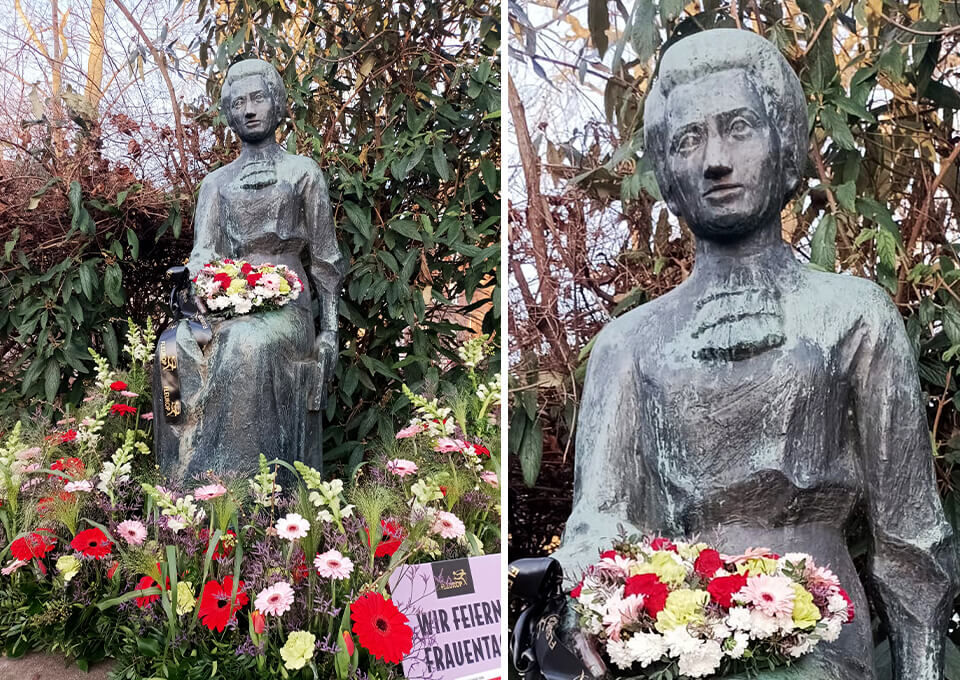
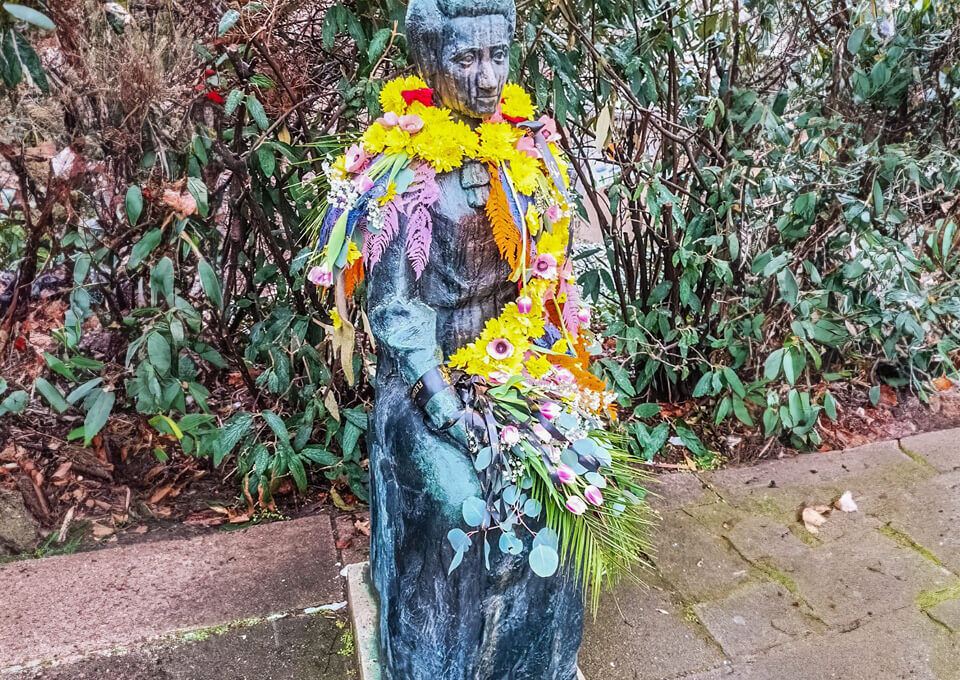
Erfurt: Rosa Luxemburg
Will be decorated on: Thursday, 05.03.2026
The most famous quote by Rosa Luxemburg from her 1918 manuscript "The Russian Revolution": "Freedom only for the supporters of the government, only for members of a party - however numerous they may be - is not freedom. Freedom is always freedom for those who think differently. Not because of the fanaticism of "justice", but because all that is instructive, salutary and purifying about political freedom depends on this essence and fails of its effect when "freedom" becomes a privilege."
Decorated by: Gloriosa Floristik
Nordhausen: Käthe Kollwitz monument
Will be decorated for the first time on: Thursday, 05.03.2026
The statue of Käthe Kollwitz in front of the school in Nordhausen depicts a woman who courageously stood up against war and social misery through her work. As one of Germany's most influential artists, she stands here not only as a historical figure, but as a true role model for humanity and moral courage. The fact that her monument stands directly at a place of education underlines her role as a moral authority who still calls on us today to take a close look and stand up for justice. Seen in this light, the sculpture is a lasting reminder of peace and a tribute to a woman who used her art as a powerful tool for social change.
Decorated by: Ewiger Frühling
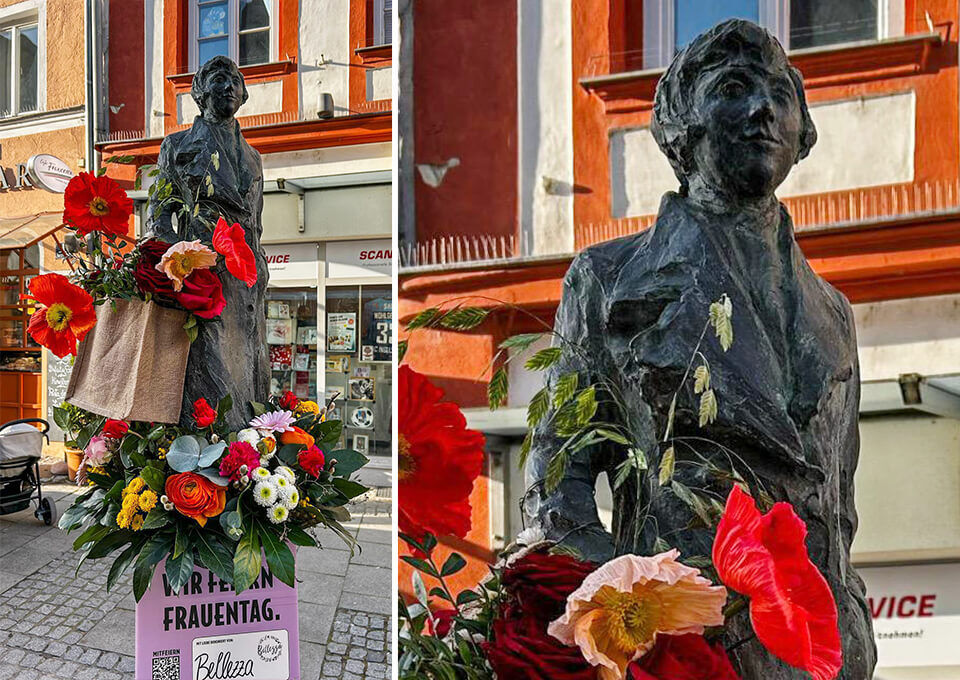
Ingolstadt: Marieluise Fleißer
Will be decorated on: Friday, 06.03.2026
Marieluise Fleißer (1901-1974) wrote her first play at the age of 22. Her texts deal with the war between men and women, speechlessness and misunderstanding, the longing for closeness, desire, violence and oppression. When she describes couple scenes, they are always fight scenes. Marieluise Fleißer has always dared to write about taboo subjects, even though scandals and outrage are the result. The naturalistic and blunt way in which Fleißer dealt with topics such as sexual exploitation and the oppression of women in a patriarchal society stood in stark contrast to the conservative moral concepts of the time. Scenes showing sexual permissiveness and criticism of military and bourgeois authorities were particularly provocative.
Decorated by: BELLEZZA flower
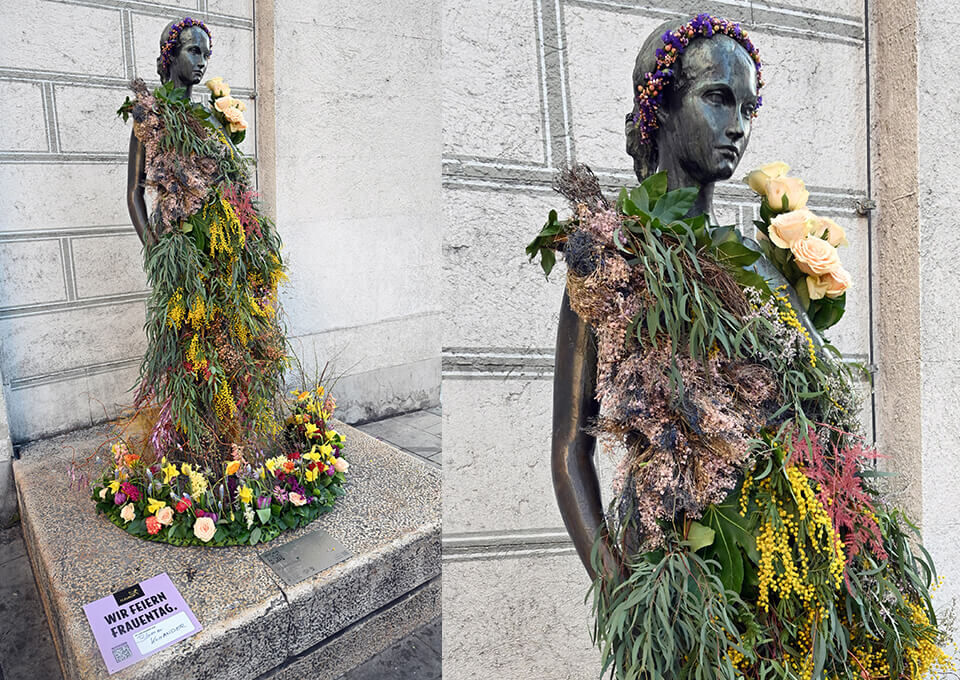
Munich: Statue of Juliet Capulet
Will be decorated on: Saturday, 07.03.2026
The Juliet Capulet statue in Munich is a replica of the original statue from Verona and symbolises love and hope despite a tragic fate. It is reminiscent of the famous character of Juliet from Shakespeare's ‘Romeo and Juliet’, who symbolises her unwavering love and longing for the forbidden Romeo. The statue has adorned the square by the Old Town Hall since the 1970s and attracts numerous visitors who seek their happiness in love - whether by touching the statue or leaving flowers and padlocks.
Decorated by: Blumen Komander
Berlin: Peace dams
Will be decorated on: Sunday, 08.03.2026
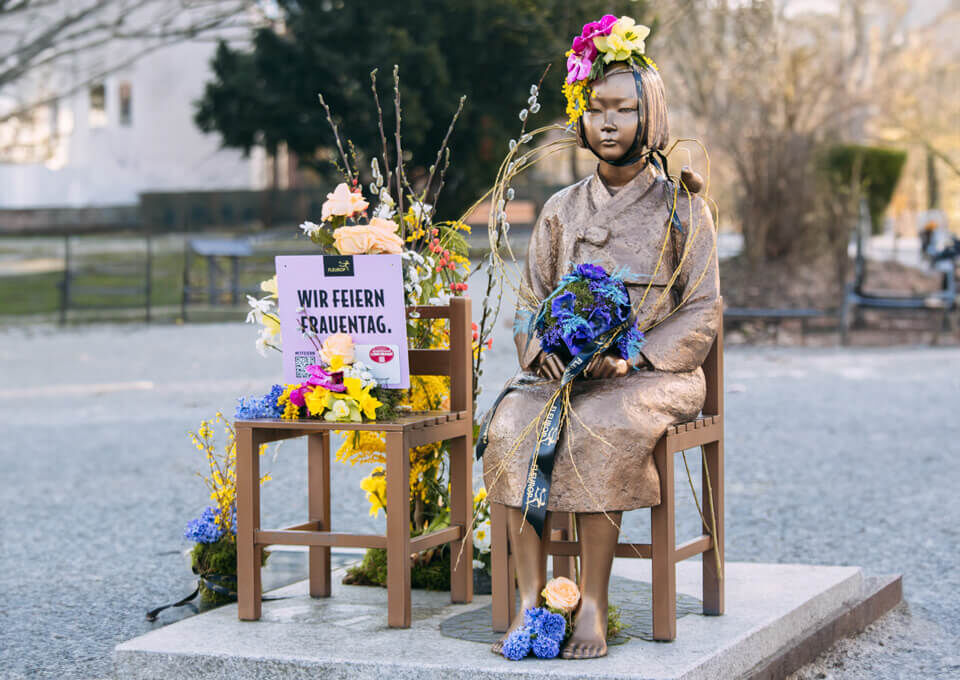
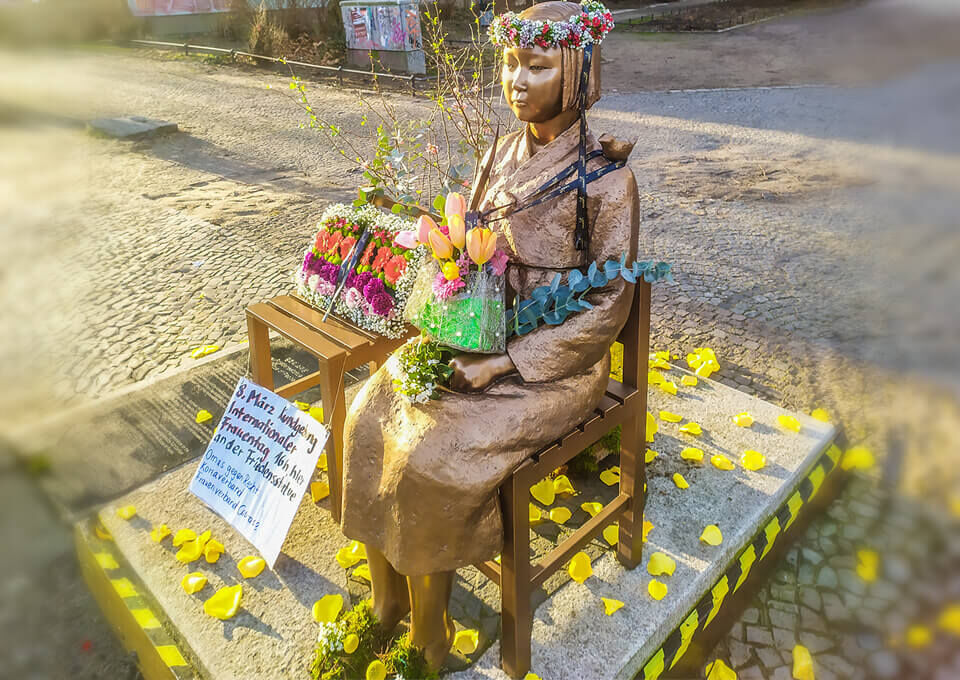
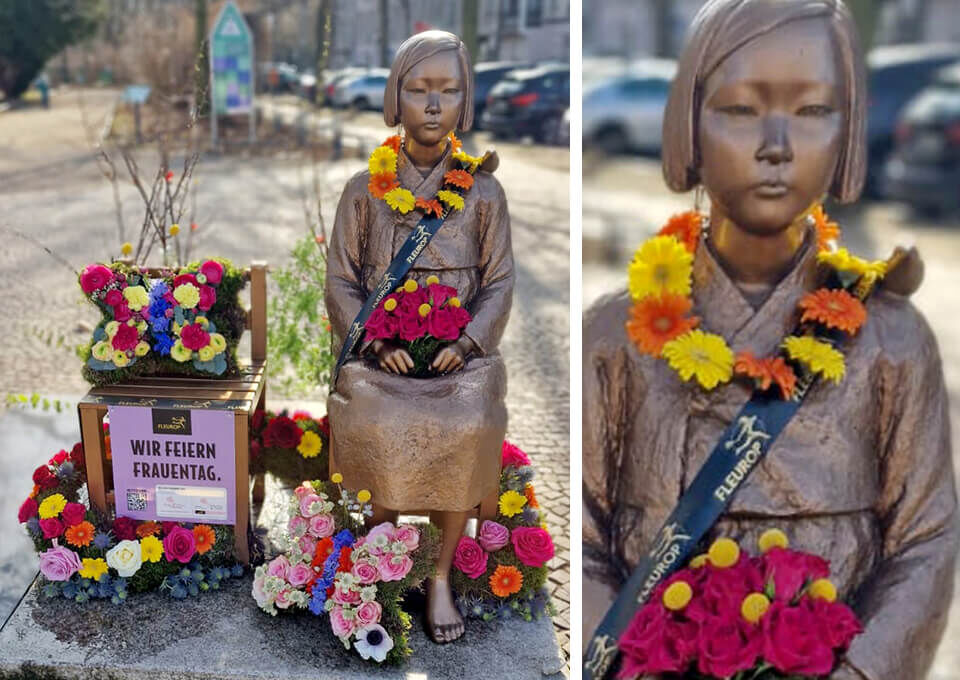
The peace statue is a memorial to the comfort women - women and girls who were systematically abducted by Japanese soldiers during the Second World War and forced into sexual slavery. It is estimated that 200,000 women and girls were involved. The peace statue thus stands as a symbol against war crimes and a sign of hope for these women and for victims of sexualised violence worldwide.
Decorated by: Flower Power Berlin, Andy's u. Mona's Blumentraum
Berlin: Trümmerfrauen memorial
Will be decorated on: Sunday, 08.03.2026
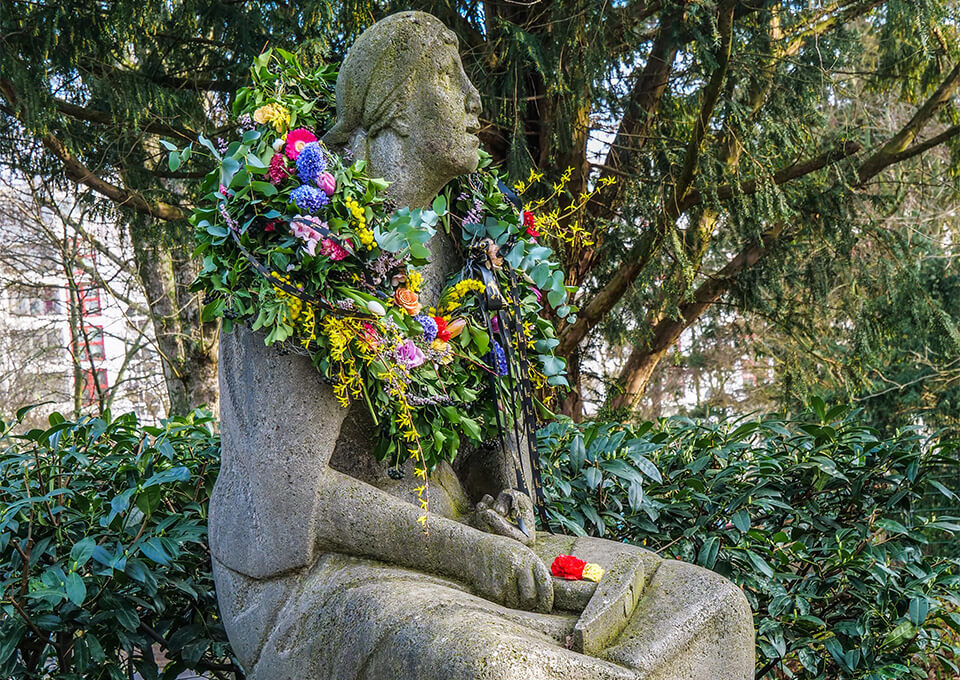
The Trümmerfrauen memorial honours all the women between the ages of 15 and 50 who were involved in rebuilding the city in the post-war period. In 1946, the new newspaper of the East German CDU warned that a woman's main task was still to be a housewife, mother and to give birth. It was not until 1965 that the former women of the rubble were honoured by the Lord Mayor. The statue symbolises the recognition of female work, visibility in the public sphere and criticism of traditional gender roles.
Decorated by: Heide Blumenfachgeschäft
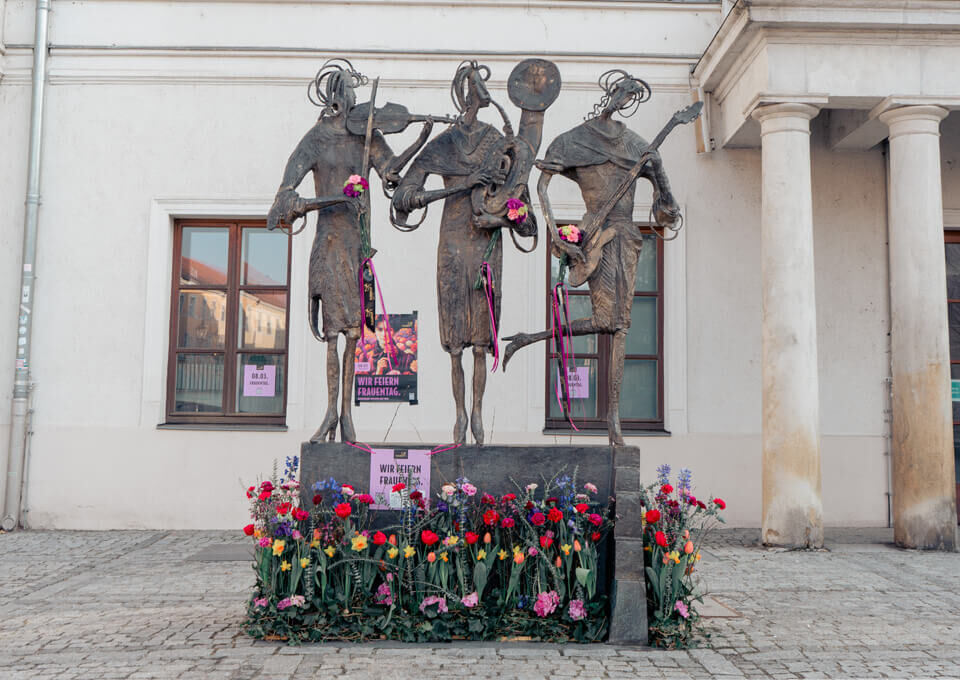
Regensburg: Sculpture "Three Muses of Music"
Will be decorated on: Sunday, 08.03.2026
Three women playing the violin, tuba and guitar: The depiction of the muses as female figures representing creative inspiration and musical expression emphasizes the importance and contribution of women in music. It emphasizes the role of women not only as muse and source of inspiration, but also as active creators and interpreters of musical art. Accordingly, the sculpture can be interpreted as a recognition of women's abilities and contributions to culture and a critique of their historical marginalization.
Decorated by: Blumenhaus am Hochweg
Hamburg: Sculpture "Diana with Dogs"
Will be decorated for the first time on: Sunday, 08.03.2026
The depiction of Diana with her dogs breaks with the classical image of women as passive subjects and instead focuses on strength, autonomy and determination. As the goddess of the hunt, she symbolises the connection between female sovereignty and an active, creative force that confidently dominates her surroundings. In this dynamic, women are not shown as needing protection, but as independent actors who control their own destiny. Accordingly, the sculpture can be interpreted as a recognition of female self-assertion, questioning traditional role models and honouring women as powerful, free creators in public space.
Decorated by: Dekoträume Blumen & Dekorationen
women's statues all over germany
In recent years, we have honoured the following women:
In Baden-Württemberg
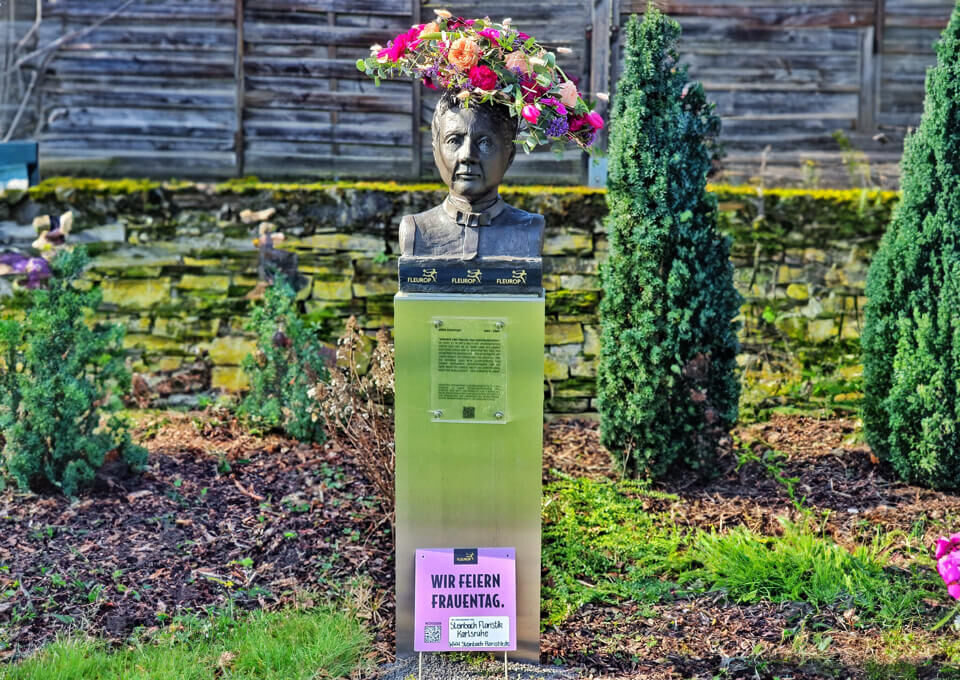
Karlsruhe: Erna Scheffler
Erna Scheffler (1893 - 1983) was not only the founding president of the Soroptimist Club Karlsruhe, she was also the first female judge to be appointed to the Federal Constitutional Court in Karlsruhe. The daughter of an oil mill owner, she was born in Breslau on 21 September 1893, studied law as a young woman and passed her second state examination in 1925. After the end of the Second World War, she initially worked in Berlin, then moved to the Düsseldorf Administrative Court in 1949 before coming to Karlsruhe in 1951. As early as 1950, she spoke at the German Lawyers' Conference in favour of equal rights for men and women, an issue she pursued throughout her life. The Soroptimistinnen Karlsruhe are honouring Erna Scheffler's gravesite with the creation of a bust by the sculptor Bronislava von Podewils.
Decorated by: Steinbach Floristik
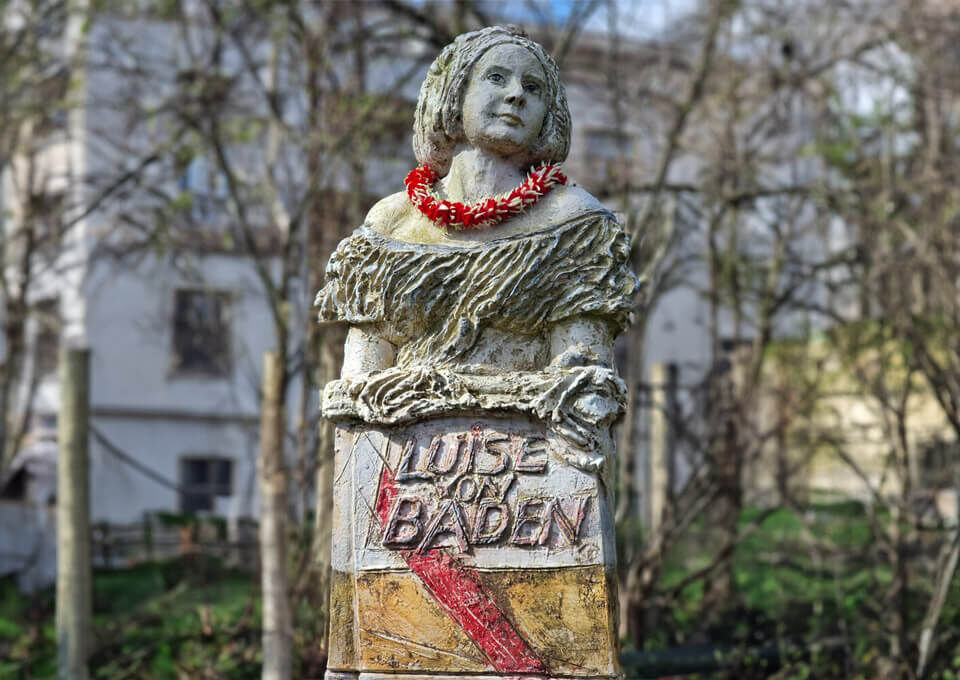
Karlsruhe: Luise von Baden
Luise Marie Elisabeth von Baden (1838-1923), born Princess of Prussia, was the daughter of Emperor Wilhelm I of Germany. She was known for her social commitment and charity work. She actively promoted the founding and support of social institutions such as hospitals, educational centres and orphanages. Her work had a significant impact on improving social conditions in Baden. Her connections to the leading European dynasties, including through her relationship with the British Queen Victoria, strengthened her role in the diplomacy and society of her time. Luise von Baden is still honoured today for her deep social awareness and her commitment to improving social conditions.
Decorated by: Steinbach Floristik
In Bavaria
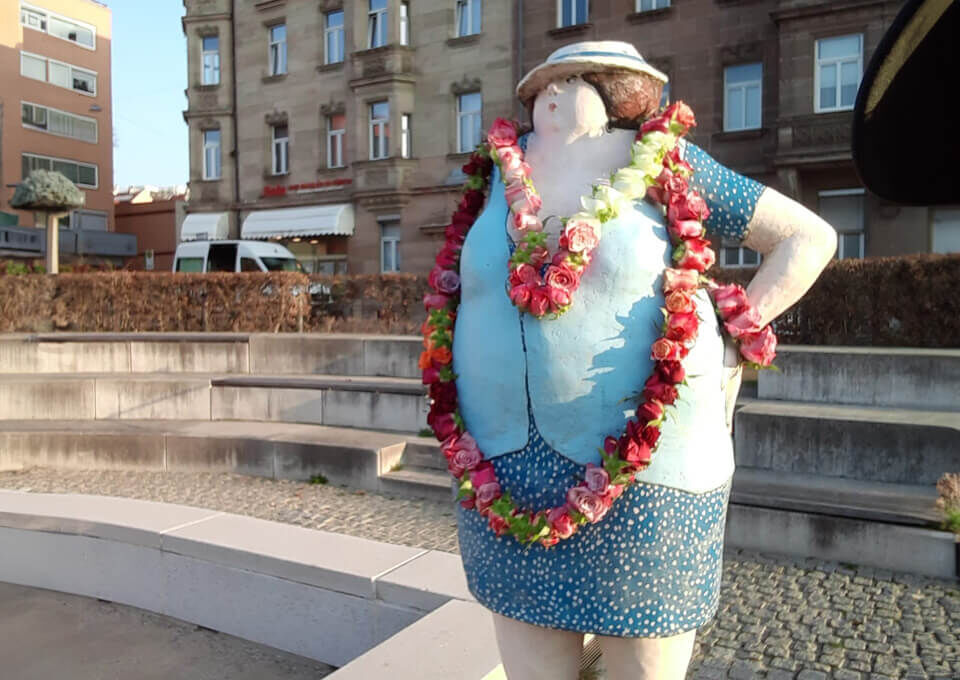
Fürth: Fountain Billinganlage
The ironically exaggerated figures provide life and variety - the female role dominates in this bizarre interplay of a colourful society. The women are completely at peace with themselves and this place. The sculptor makes no claim to philosophical depth with this depiction, yet the aesthetics of the design not only represent the acceptance of diverse body images, but also emphasise the presence of women.
Decorated by: Blumenhaus am Espan
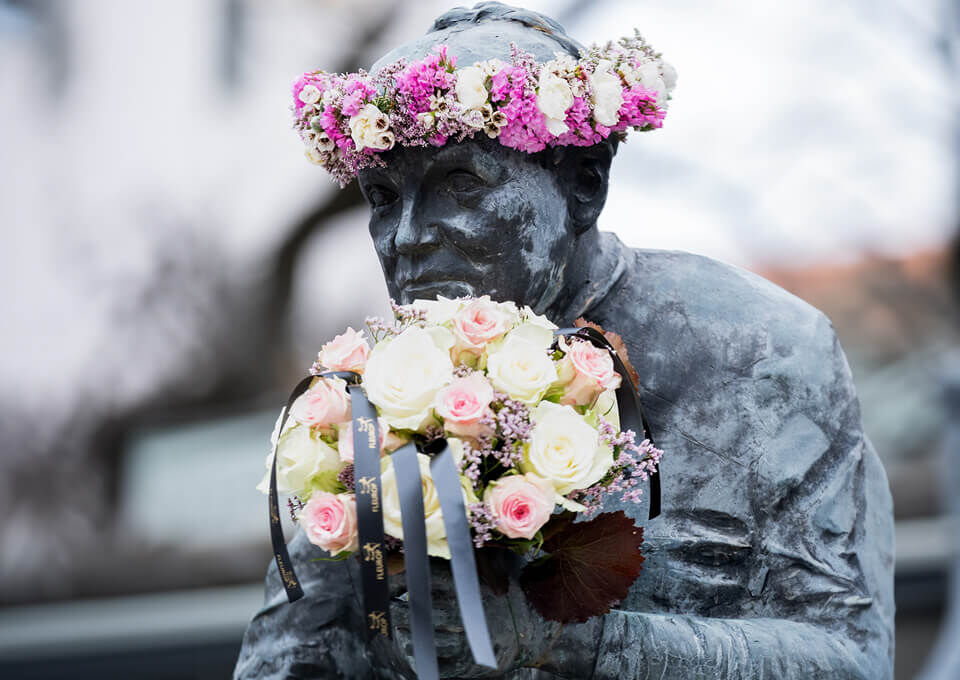
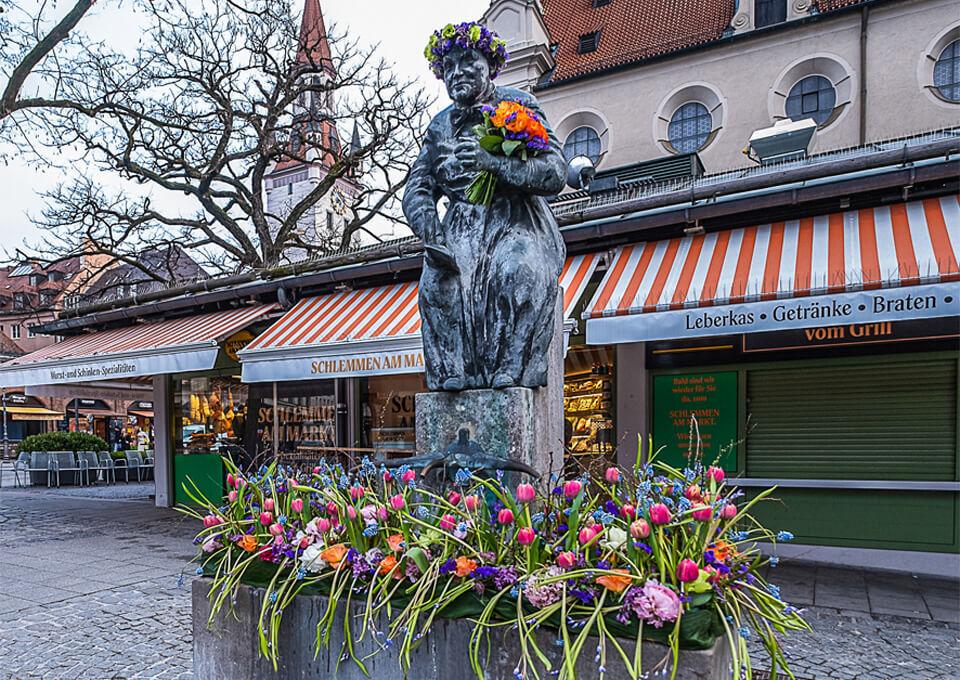
Munich: Elise Aulinger
Elise Aulinger (1881-1965) was one of the most popular Bavarian folk actresses. She managed to bring the characteristics of her characters to life and convey authenticity through her acting. She began her radio career in 1925 with a reading, establishing a tradition of Bavarian radio that continues to this day. Even though her name may not be as well known today, she was still considered one of the leading character actresses of her time in the genre of popular theater.
Decorated by: Blumen Komander
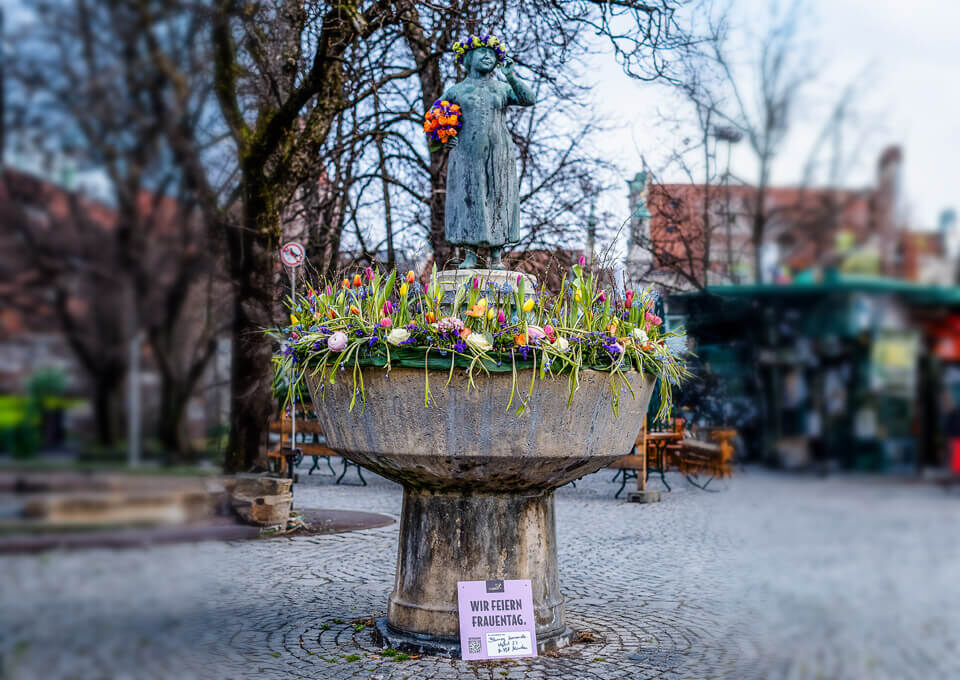
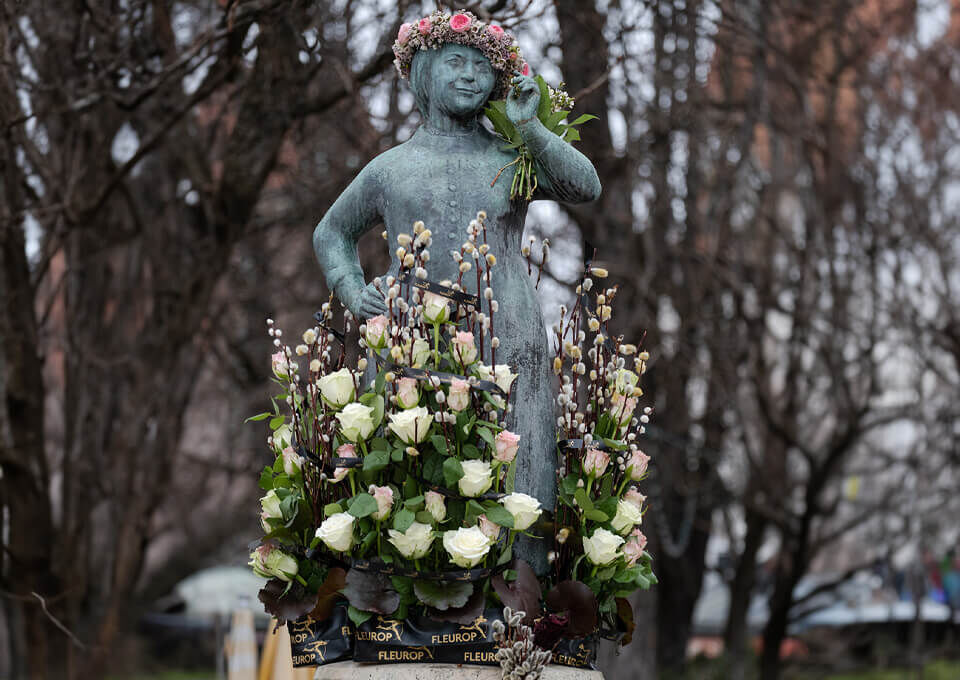
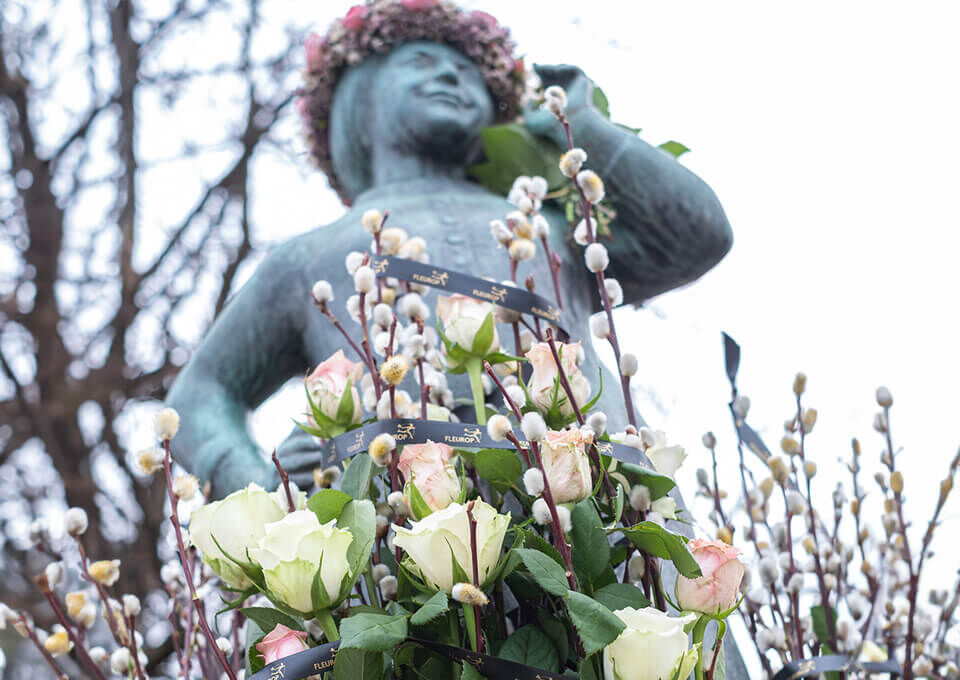
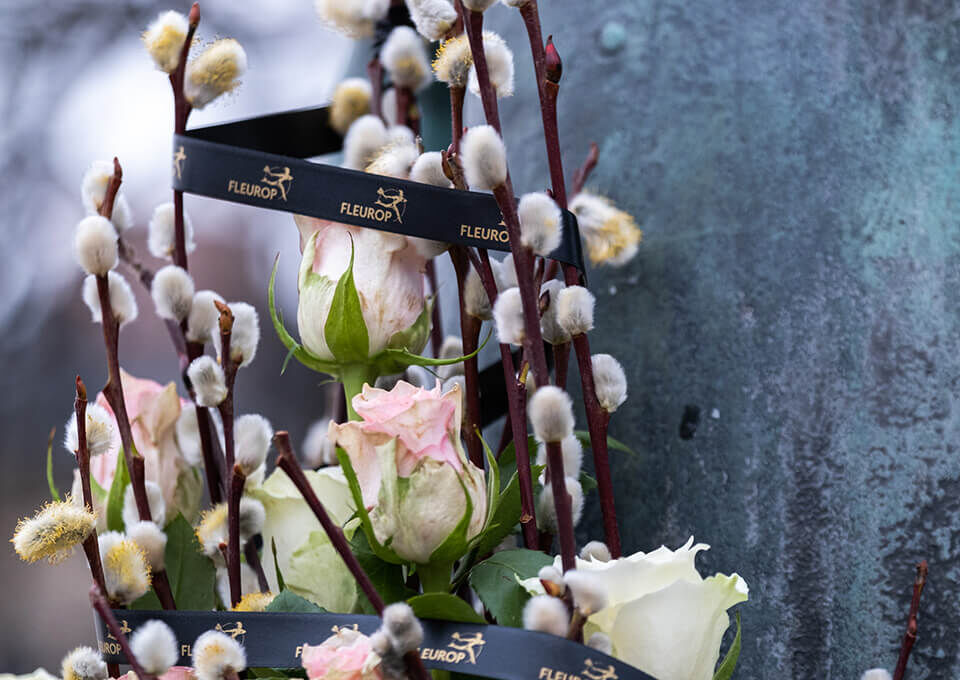
Munich: Liesl Karlstadt Fountain
Liesl Karlstadt (1892-1960) was an important actress and comedian. Together with her stage partner Karl Valentin, she performed as a successful comedy duo for 26 years. Liesl Karlstadt was known for her versatility and comedic talent. However, her career was hampered by health problems and crises, which kept her away from the stage for a time. Nevertheless, she left behind an impressive artistic legacy that is still remembered today.
Decorated by: Blumen Komander
In Berlin
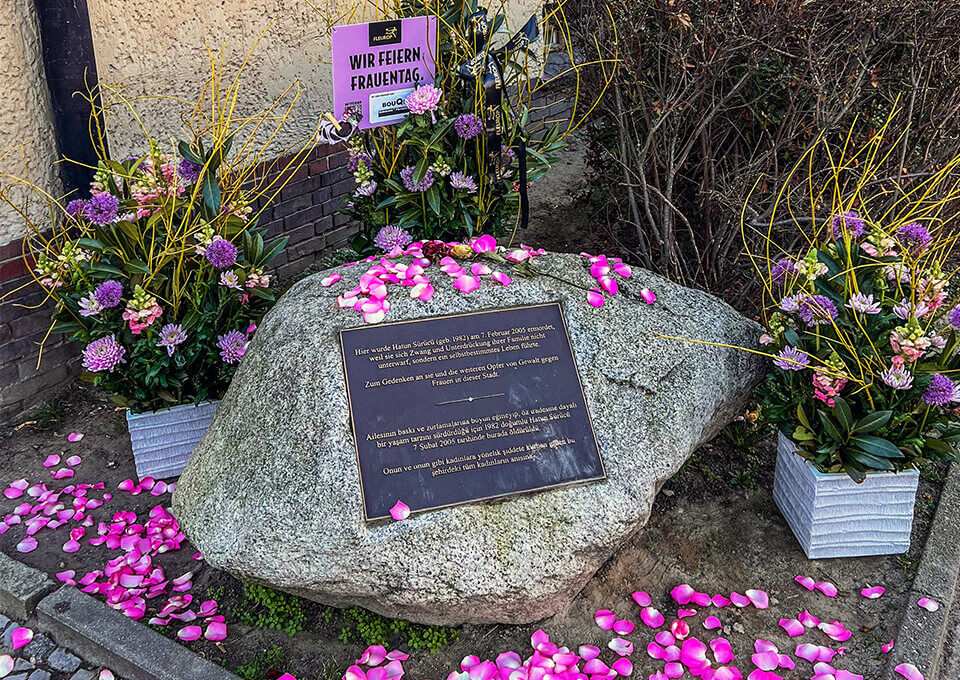
Berlin: Hatun Sürücü
This year marks the 20th anniversary of Hatun Sürücü's death. The then 23-year-old German-Kurdish woman was the victim of a femicide in Berlin on 7 February 2005. The murder caused nationwide horror, as Hatun had the courage to break out of the role model prescribed by her family and lead a self-determined life. She had left a forced marriage, took off her headscarf, completed her secondary school leaving certificate and began an apprenticeship as an electrician. Her death remains an inconceivable example of violence against women.
Decorated by: Bouquet - Heike Salzmann
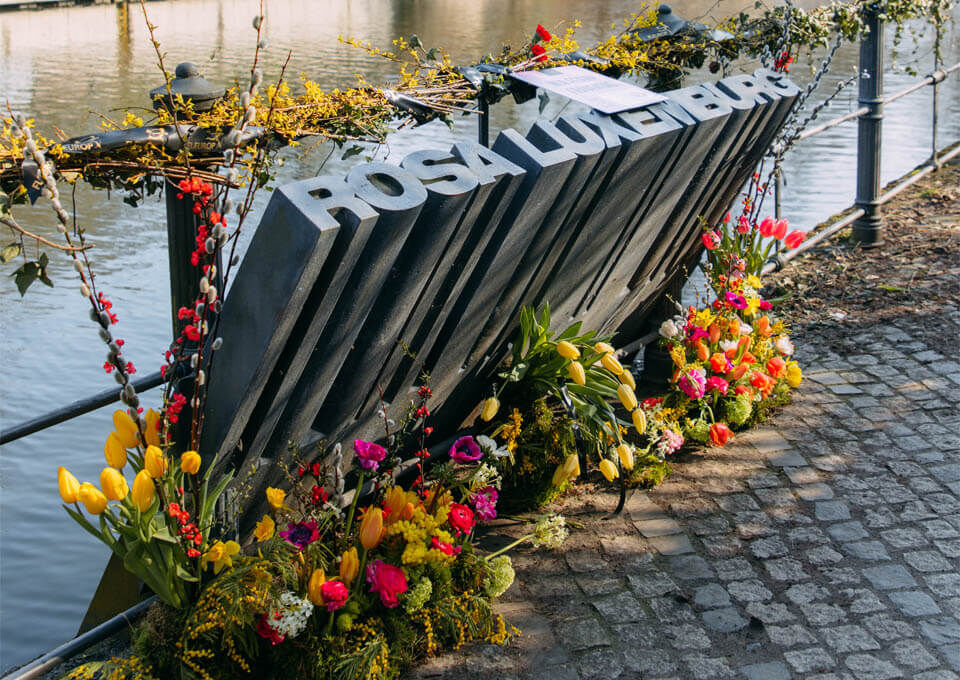
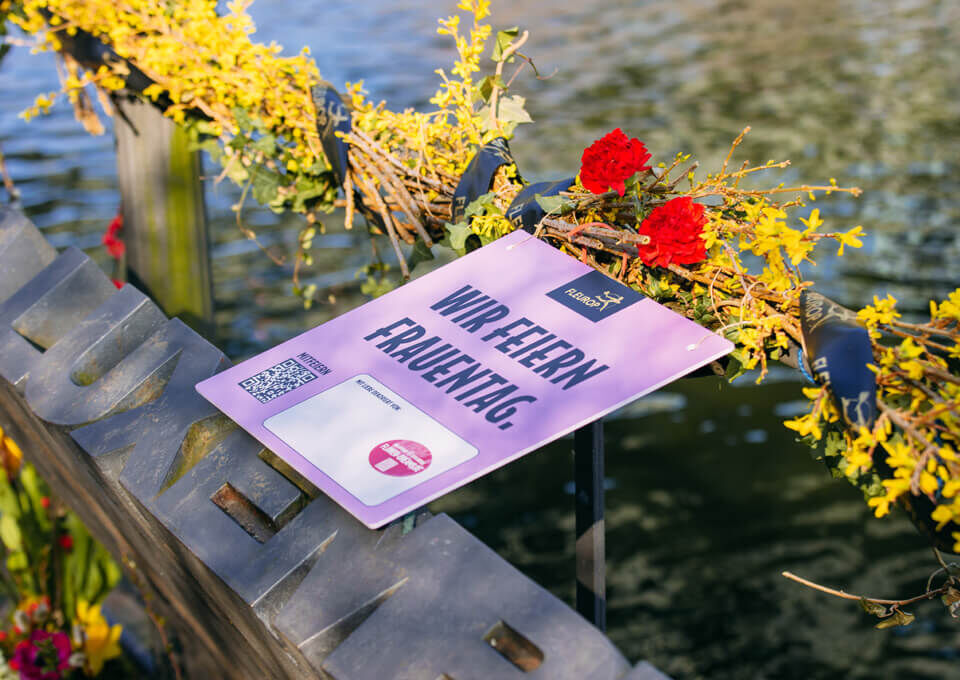
Berlin: Rosa Luxemburg
Rosa Luxemburg (1871-1919) is still regarded as a symbolic figure of left-wing politics today. Many see her as the greatest left-wing politician of the 20th century or even of all time. She was an important Marxist theorist, socialist and revolutionary who is known for her role in the socialist movement against capitalism and monarchy in Germany and internationally. After the First World War, there was a revolution in Germany and at the beginning of 1919 she was treacherously murdered. Her legacy as a theorist, activist and symbol of the fight against oppression and for social justice lives on in many political movements around the world. Her fighting spirit and determination were extraordinary and make her a role model for many.
Decorated by: Andy's u. Mona's Blumentraum
In Brandenburg
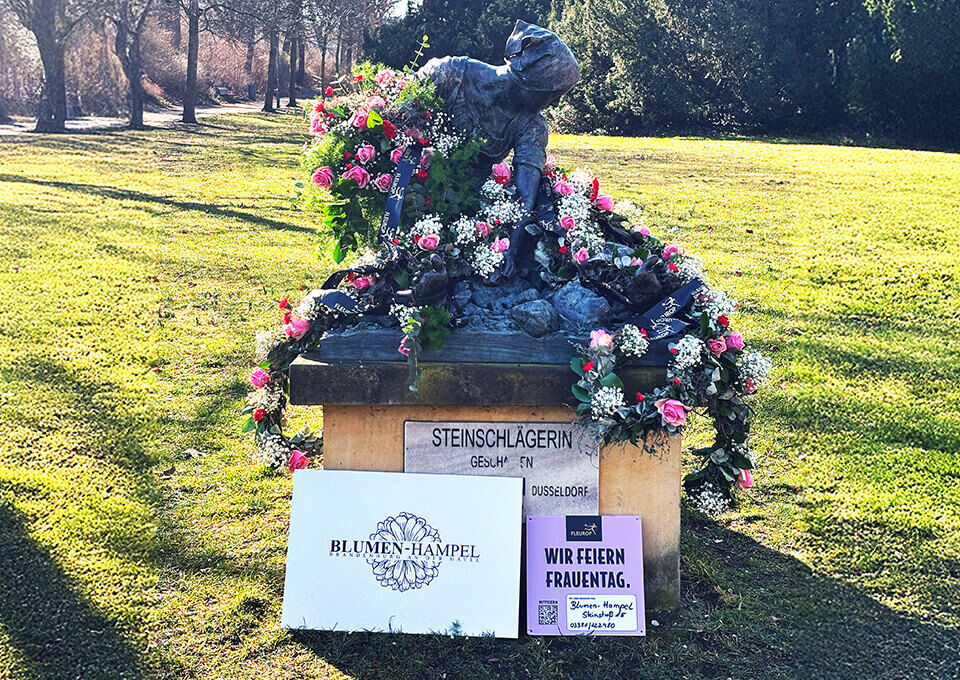
Brandenburg an der Havel: Stone cutter
The statue of the ‘Steinschlägerin’ is a reminder of the women who worked under harsh conditions in the industry over a hundred years ago. They performed hard, physical labour and often received only meagre wages in return. At the same time, they were left on their own to bring up their children and often had to take their infants to work with them. Karl Janssen took up this theme in 1902 and created the statue as a symbol of the double burden that women had to endure at the time. The ‘Steinschlägerin’ symbolises the tireless strength of these women, who nevertheless struggled to provide for and feed their families at a time when their achievements were often overlooked.
Decorated by: Blumen-Hampel
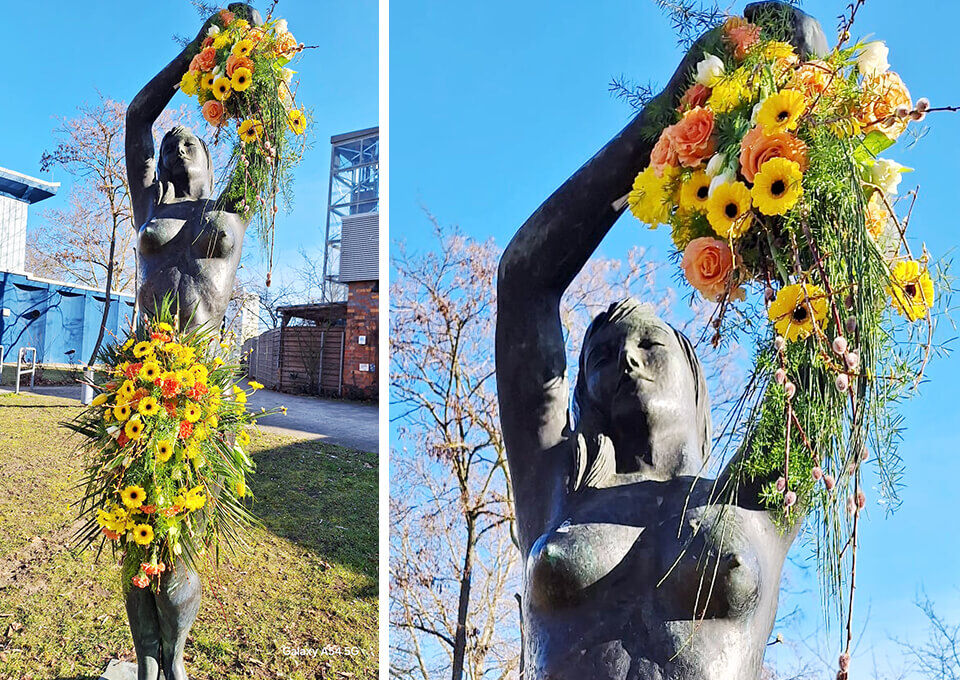
Potsdam: Sonja sports student
In the 1970s, sporting activity was seen as an important element of social and individual development - the sculpture epitomises these values. It symbolises the combination of science, education and physical culture, which were strongly promoted in the GDR, especially among young women. Sport was promoted at the time as a way of fostering health, discipline and community, and the figure of ‘Sonja’ symbolises a modern, active, academic woman in this context.
Decorated by: Blumenhandel Schmidt
In Bremen
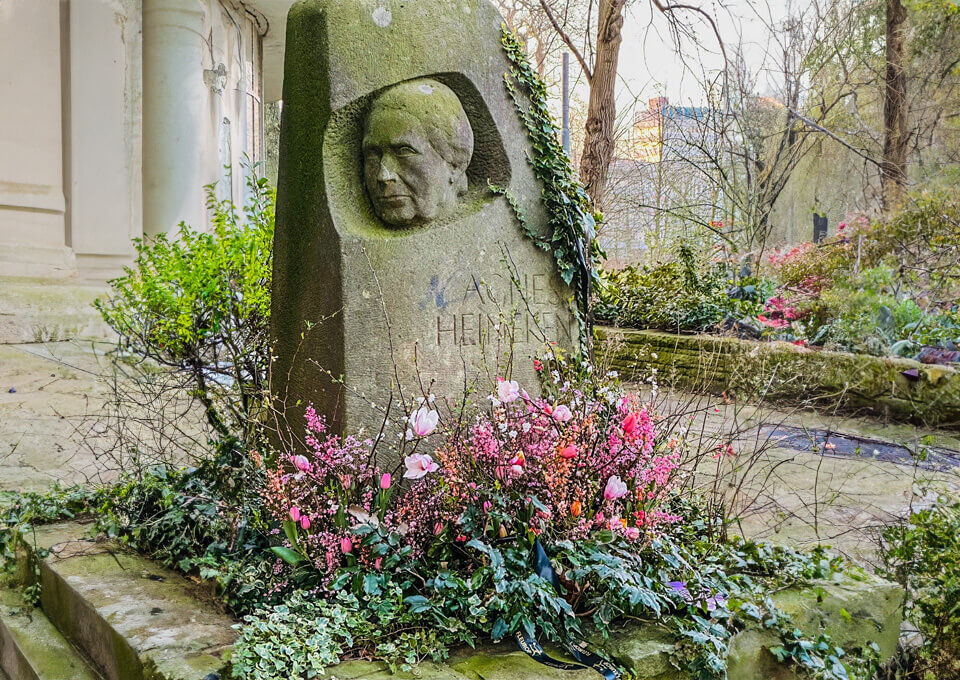
Bremen: Agnes Heineken
Agnes Heineken (1872-1954) was an educator, women's rights activist and politician. At the time, access to education for women was systematically restricted and she campaigned for the education and advancement of girls and women. She was a pioneer in the educational landscape of her time, whose efforts contributed significantly to improving educational opportunities for girls and recognising the importance of women's education. Her work remains an important chapter in the history of education and the women's movement in Germany.
Decorated by: Blumenkorb An der Weide
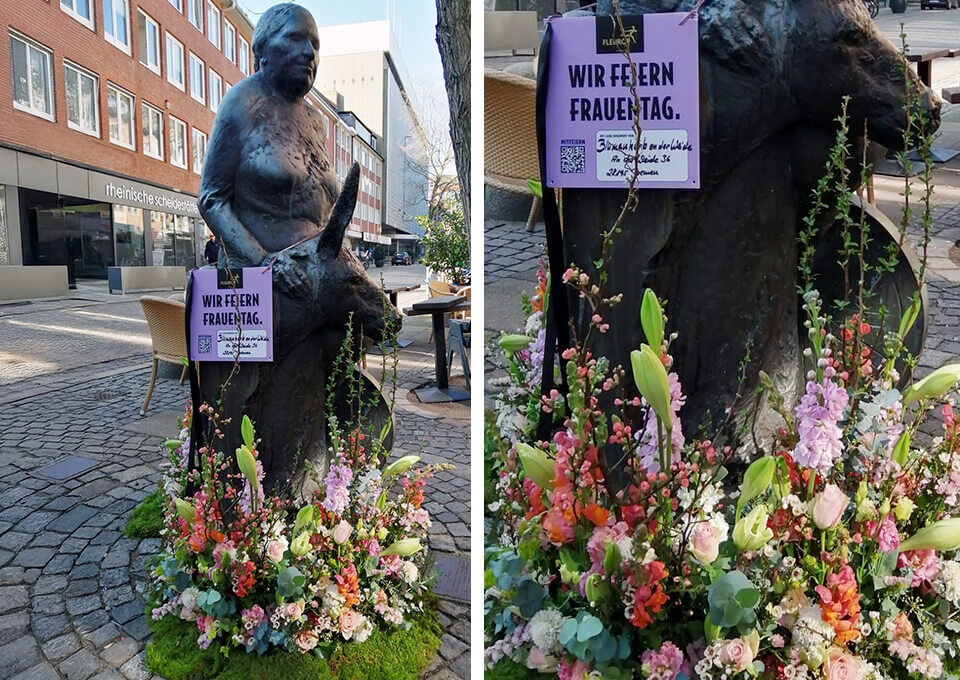
Bremen: Mudder Cordes
Metta ‘Mudder’ Cordes became known as a market woman in Bremen in the 19th century. After the sudden death of her husband in 1860, she was left with nothing. To secure her livelihood, she began selling vegetables in Bremen's Neustadt district, initially pulling the cart herself, then being given a dog and later a donkey named Anton to pull the cart. Mudder Cordes is still remembered today as an example of energy and perseverance and is considered one of Bremen's 19th-century originals.
Decorated by: Blumenkorb An der Weide
In Hesse
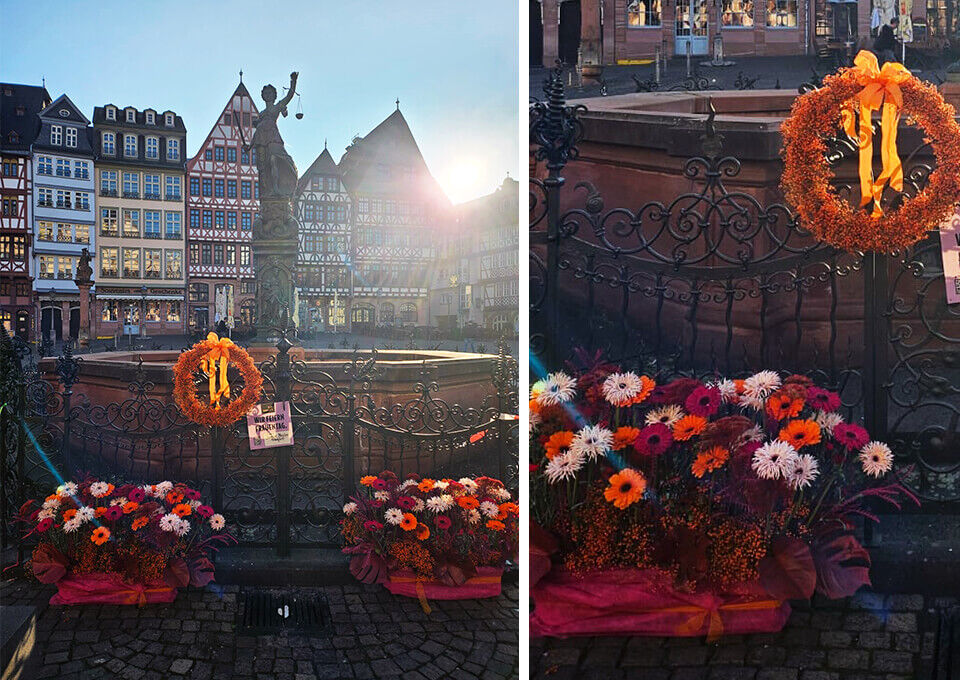
Frankfurt am Main: Fountain of Justice
The Fountain of Justice is a highly symbolic monument that epitomises the values of justice and the rule of law. The fountain was erected in 1543 and is located on the Römerberg, the city's historic market square. It depicts an allegorical figure of Justitia - the Roman goddess of justice. The scales stand for the weighing of arguments and the pursuit of balanced judgements, while the sword symbolises the enforcement of justice. The Fountain of Justice is therefore a memorial to the importance of fair justice and the pursuit of justice in a society. It is the oldest fountain in Frankfurt.
Decorated by: A + A Blumen-Meister GmbH
In Mecklenburg-Western Pomerania
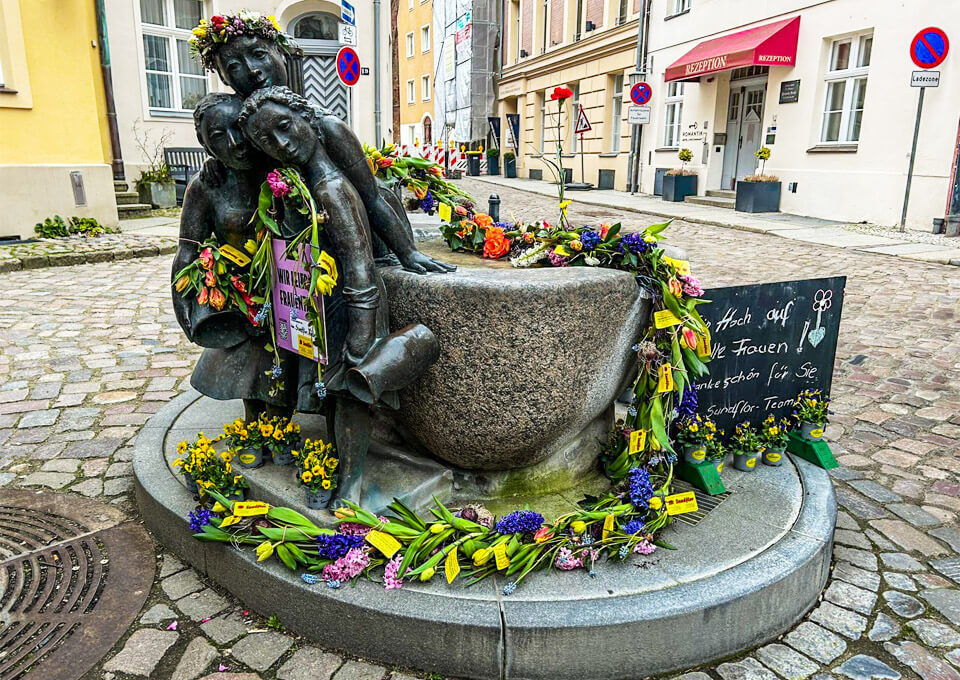
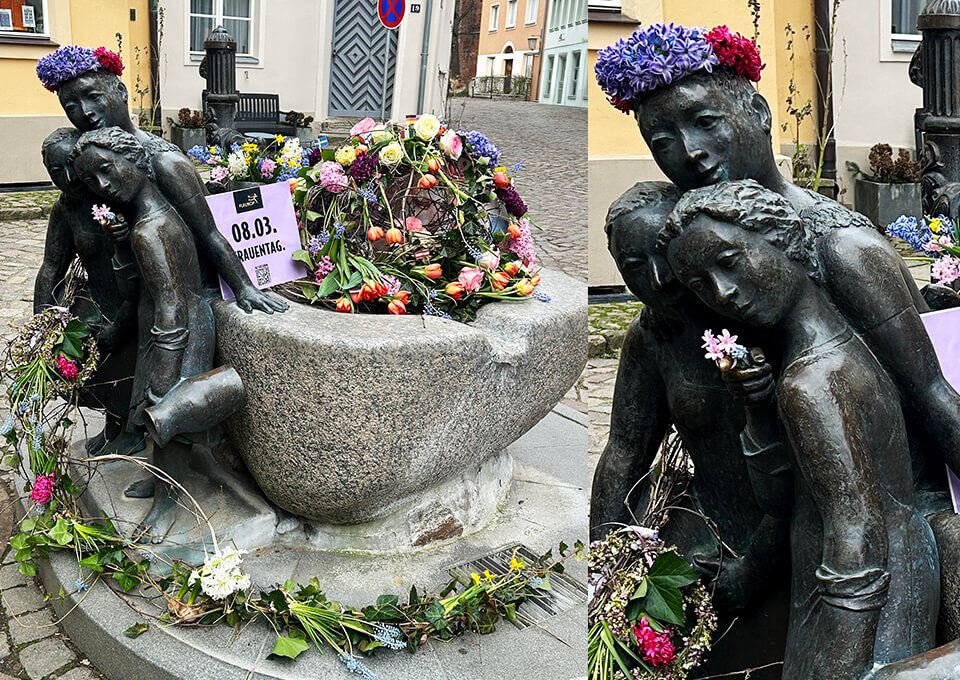
Stralsund: The chatty women "Mägdebrunnen"
At first glance, the Mägdebrunnen seems to depict a stereotypical image of women, but the performance can also express social cohesion and mutual support. Historically, public spaces such as fountains were important places for women to meet and exchange information, which was often one of the few opportunities for women to participate in public life in a male-dominated society. It can therefore be interpreted as a tribute to the strength and perseverance of women in the community, who often maintain the social fabric through their relationships and communication.
Decorated by: Blumen Handels- und Beteiligungsgesellschaft mbH
In Lower Saxony
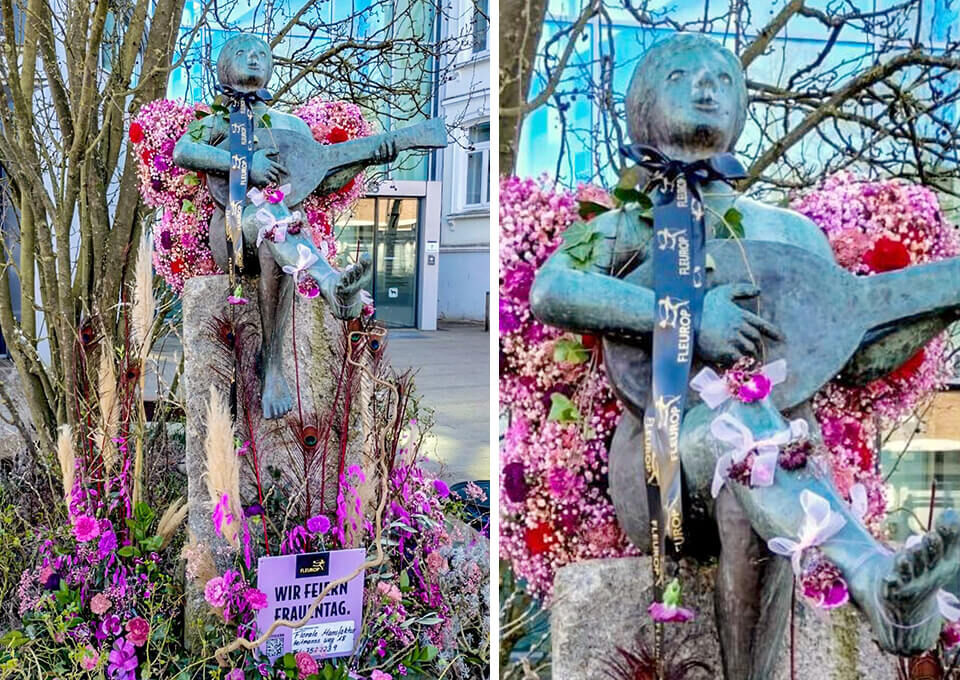
Buxtehude: Guitar Player
The statue of the guitar player is also known as the ‘Lute Singer’. The sculpture is one of many works of art in public spaces throughout the Hanseatic city that shape the cityscape and invite visitors to explore. The Lute Singer symbolises female artists, musicians and all women who touch and inspire others with their work.
Decorated by: Florale Manufaktur Buxtehude
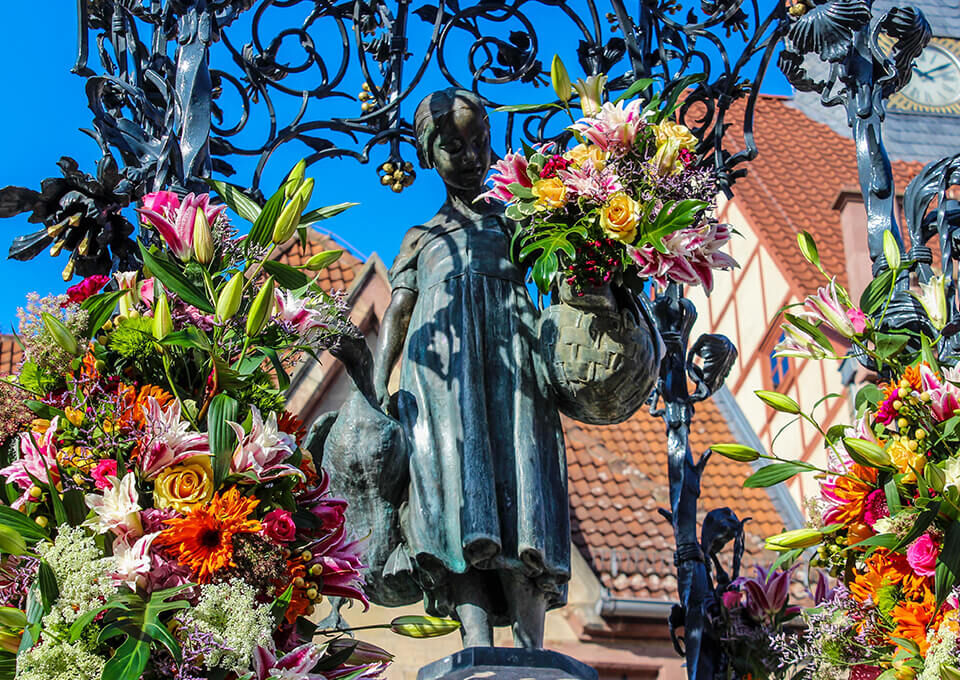
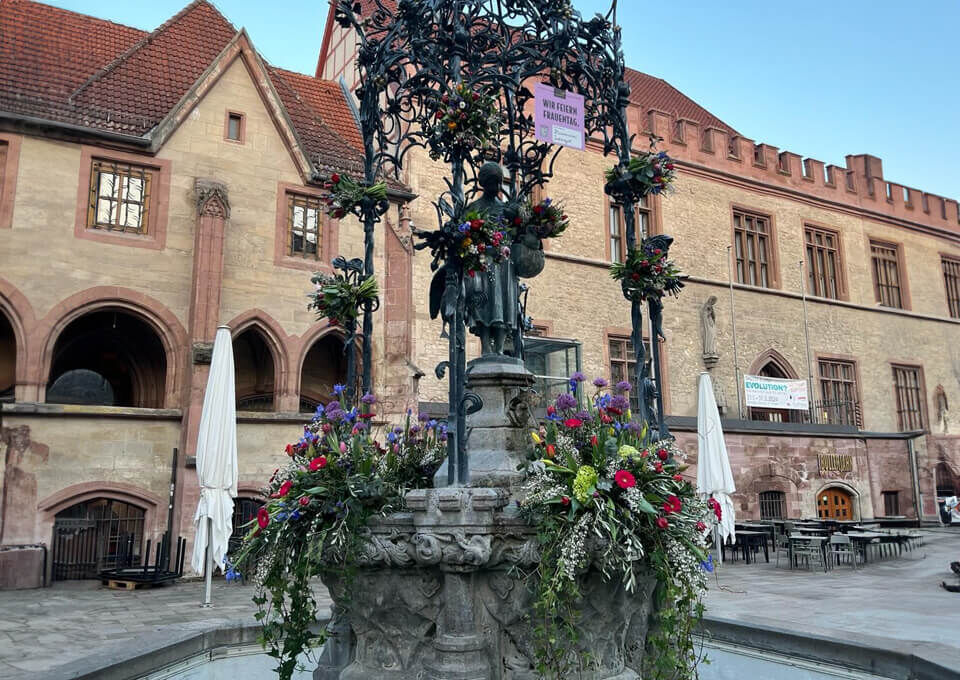
Göttingen: Gänseliesel fountain
In the 20th century, women were clearly subordinate to men and had hardly any rights. With the placement of the Gänseliesel on the market square in 1901, the female presence in public life was strengthened and made visible. This female figure eventually also became a Göttingen landmark and therefore deserves flowers, especially on Women's Day - even without the tradition of kissing.
Decorated by: Blumeninsel Sudmeyer
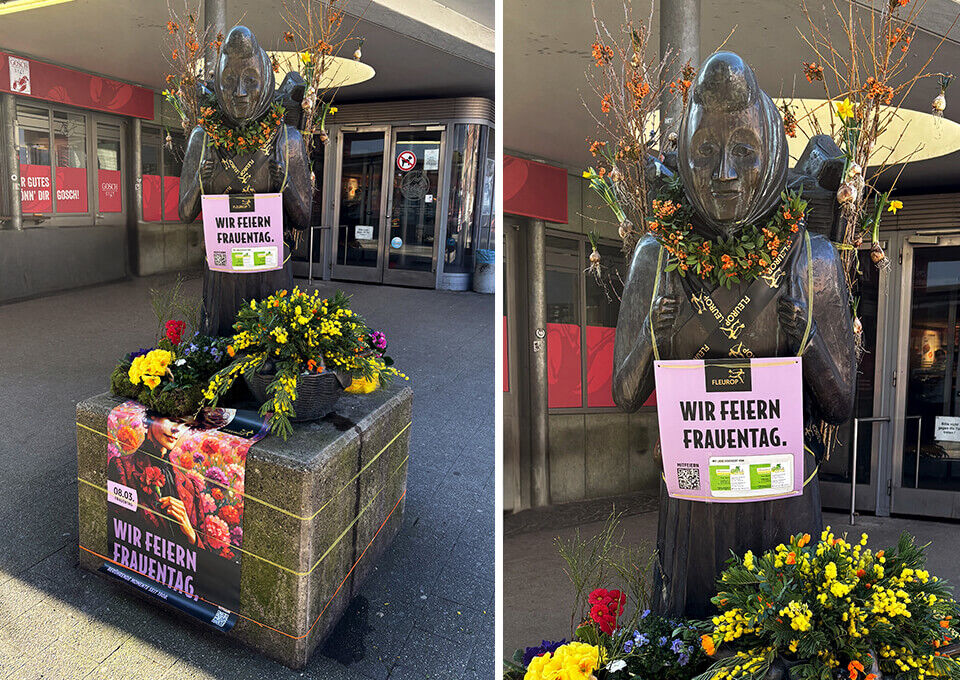
Hanover: Sculpture Market Woman
The sculpture of the market woman depicts Karoline Duhnsen, who characterised the image of the market hall for over 50 years. Every day, she brought fresh sausage products from the Schaumburg region to the city - a job that she carried out with tireless dedication. Karoline Duhnsen was an integral part of the market and was affectionately called ‘Grandma Duhnsen’ by everyone. Her presence and many years of service made her an important figure in the daily life of the market hall. She is a symbol of the women who, through their hard work and constant presence, helped to shape social life, even if this was often not recognised to the extent that their achievements deserved.
Decorated by: Blumen Flora
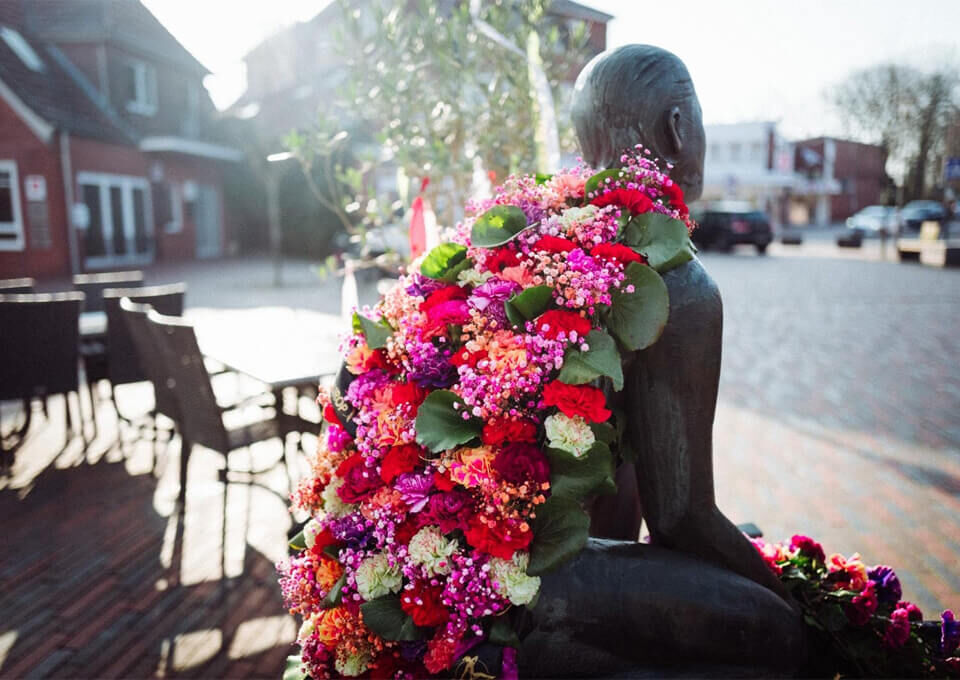
Horneburg: Statue of a midwife
The monument stands in memory of the two women from Horneburg, the midwife Olga Marie Katharina Bähr (1908-1994) and the so-called "woman of the dead" Katharina Lütje (1898-1980), who stood by the dying in their last hours and then assisted their relatives. The memorial is representative of the many dedicated women who all deserve to be honoured accordingly.
Decorated by: Blütenzauber, Silke Liebau
In North Rhine-Westphalia
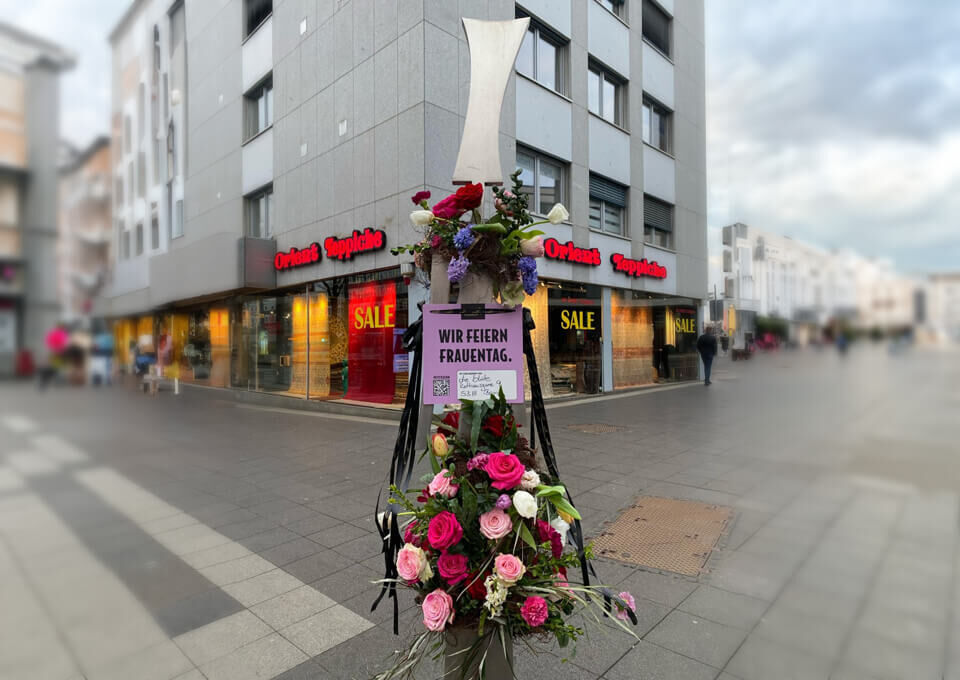
Bonn: Bertha von Suttner
She was a pacifist, writer and the first woman to receive the Nobel Peace Prize for her tireless commitment to peace and her work to promote disarmament: Bertha von Suttner (1843-1914). She was also the woman who inspired Alfred Nobel to endow the prize. Above all, she fought against the discrimination of women, repressive sexual morals, poverty, class rule, narrow-minded nationalism, anti-Semitism, religious fanaticism and even against animal testing. In 1899, she was the only woman and non-governmental representative to take part in the 1st Hague Peace Conference in The Hague.
One of her famous quotes: "Revenge and always revenge! No sensible person would want to wash away ink stains with ink, oil stains with oil. Only blood, that is to be washed away again and again with blood."
Decorated by: Die Blüte - Scheidtweiler, Sabine
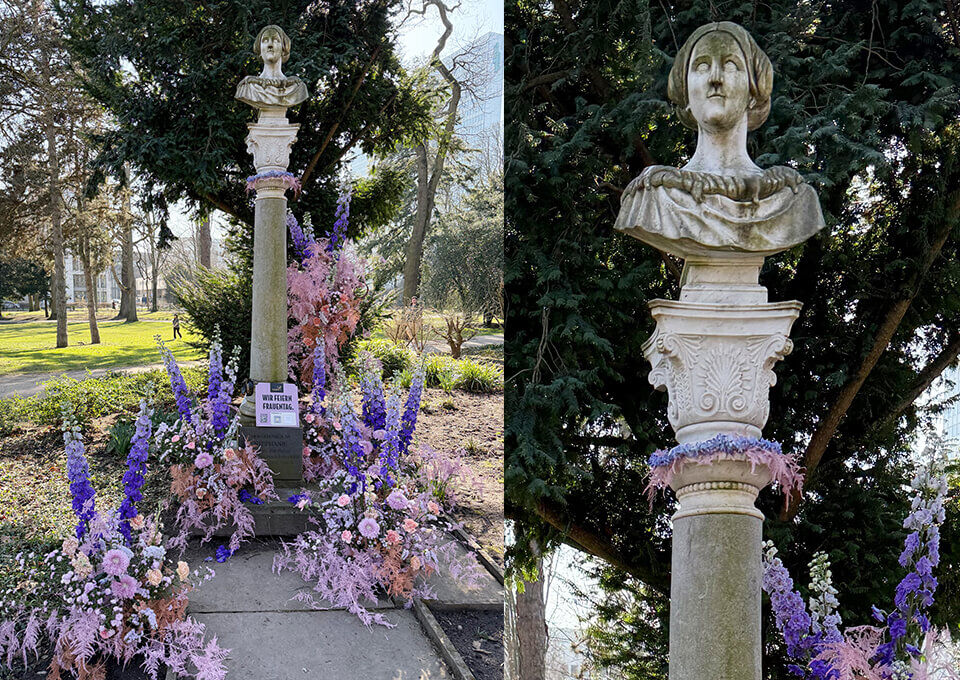
Düsseldorf: Stephanie of Portugal/Angel of the Poor
Every year on the second Sunday in May, the marksmen of Düsseldorf commemorate Princess Stephanie of Hohenzollern-Sigmaringen, who is remembered as the ‘Angel of the Poor’. Although she was only 22 years old, her short-lived marriage to the Portuguese King Peter V and her commitment to the poor shaped the image of a selfless monarch. Even though she only sat on the Portuguese throne for a short time, she remains unforgotten as a symbol of charity and a tragic figure of European royalty.
Decorated by: Blumenbinderei Gerhard Lehmann
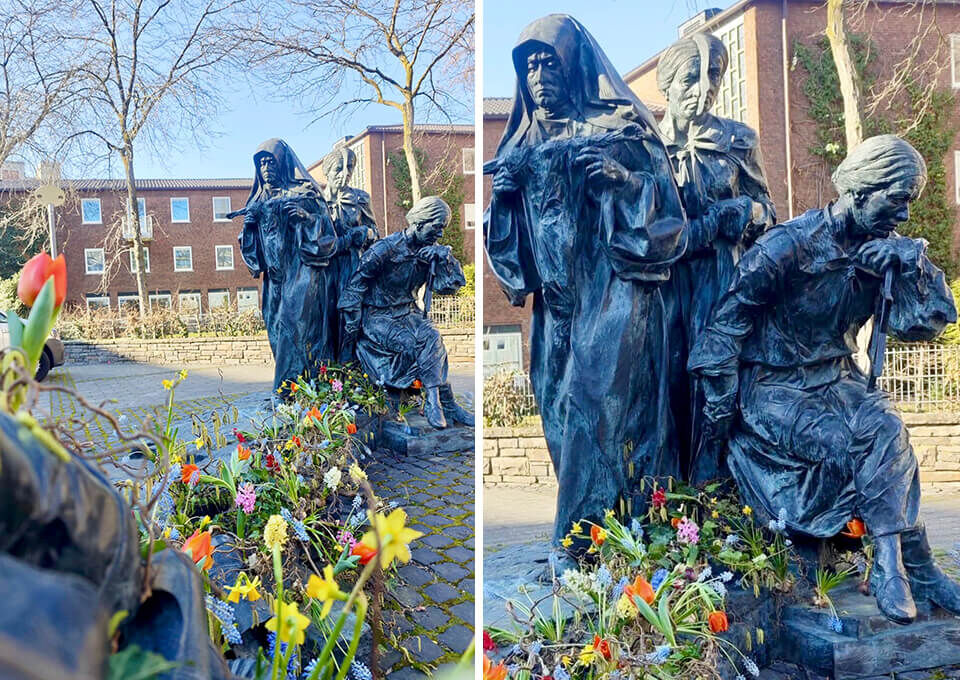
Cologne: Edith Stein Monument
Edith Stein, also known as Teresa Benedicta of the Cross, was a German-Jewish philosopher and women's rights activist. She was born Jewish in Breslau in 1891. She worked intensively on the role of women in the church and in society and tried to develop a deeper understanding of how women could be recognised and respected in both religious and secular contexts. She was murdered in the Auschwitz concentration camp in 1942. Edith Stein is considered a fascinating example of the dialogue between faith and reason, and her life story has inspired people in many different contexts. She was beatified by the Catholic Church in 1987 and canonised in 1998.
Decorated by: Blumen von Steiner
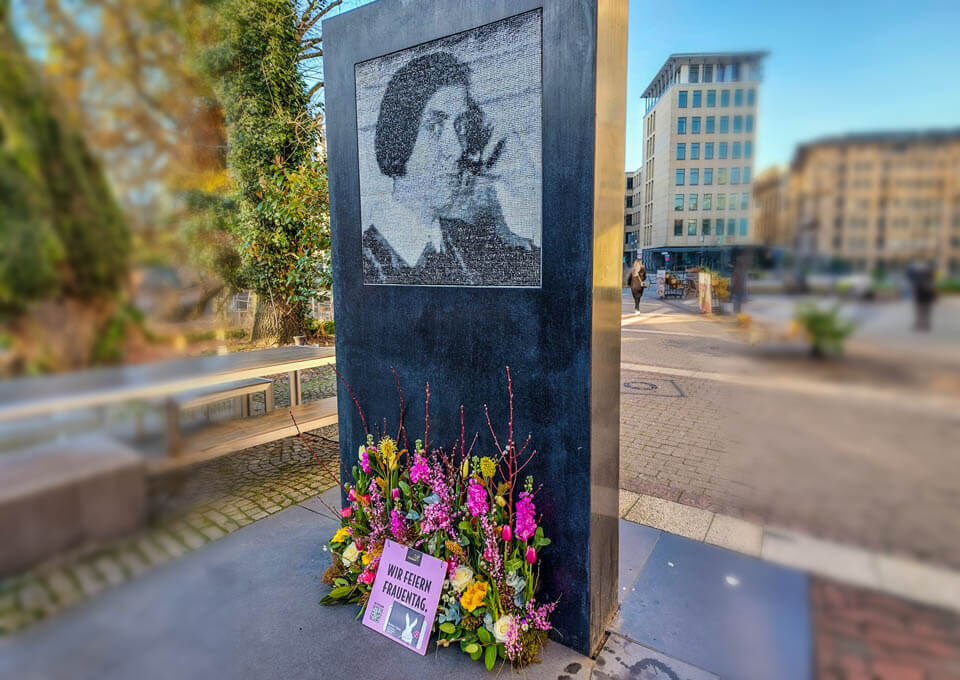
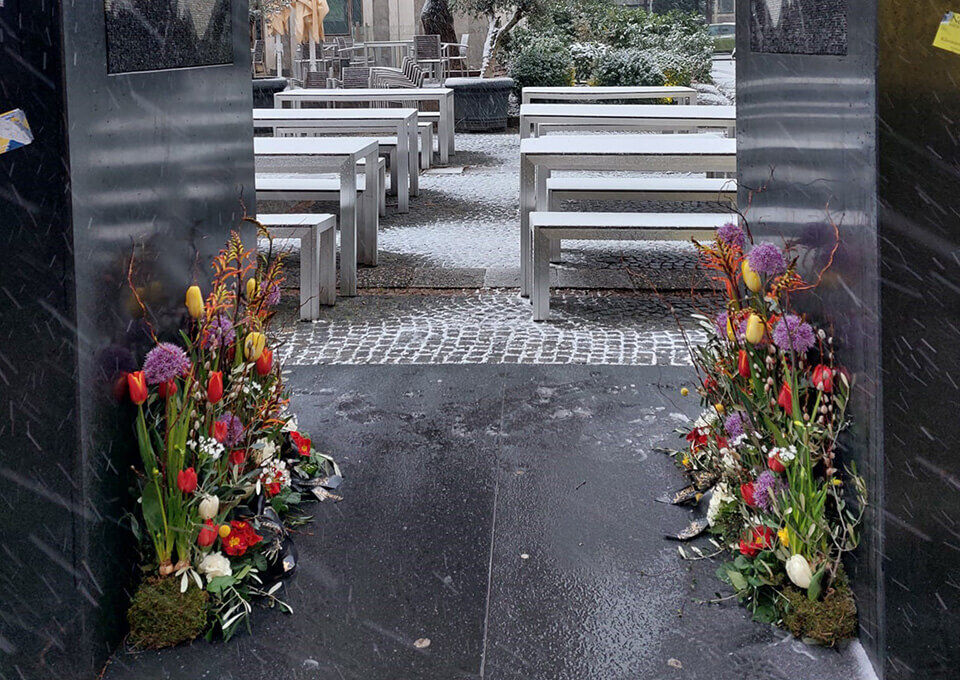
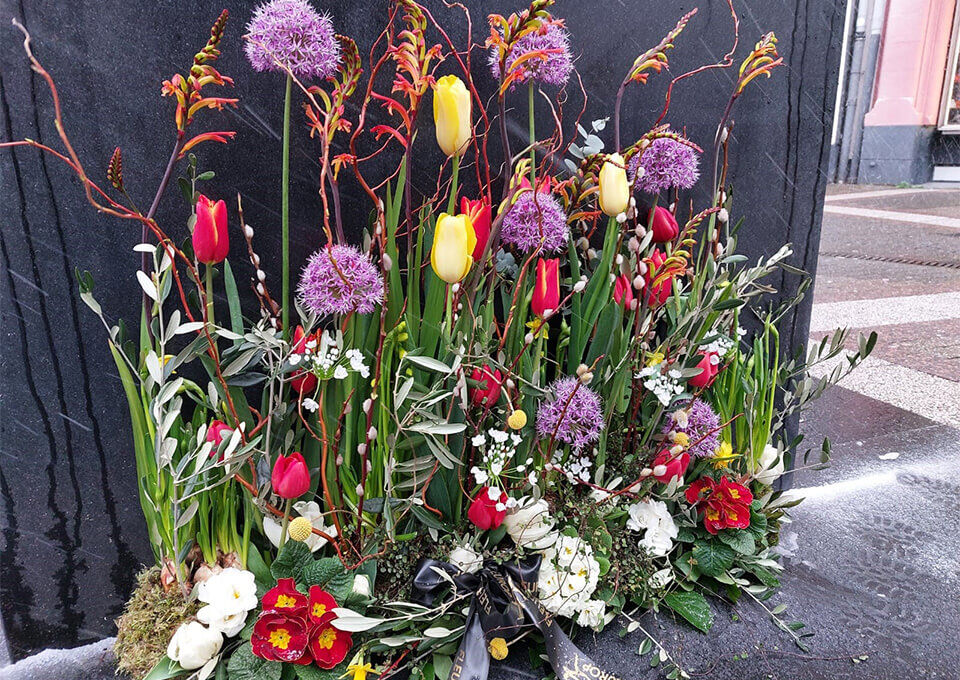
Wuppertal: Lasker-Schüler monument
Else Lasker-Schüler (1869-1945) was a Jewish poet, draughtswoman, outsider and flamboyant and is considered one of the most important voices in 20th century German literature. She devoted herself primarily to women's poetry and depicted female desire with great candour. She is directed against the 19th century's hostility towards instinct and lust. Her poetic legacy is of lasting importance. Her works are still valued today for their originality, powerful language and their ability to express profound experiences.
Decorated by: Blumenhaase
In Saxony
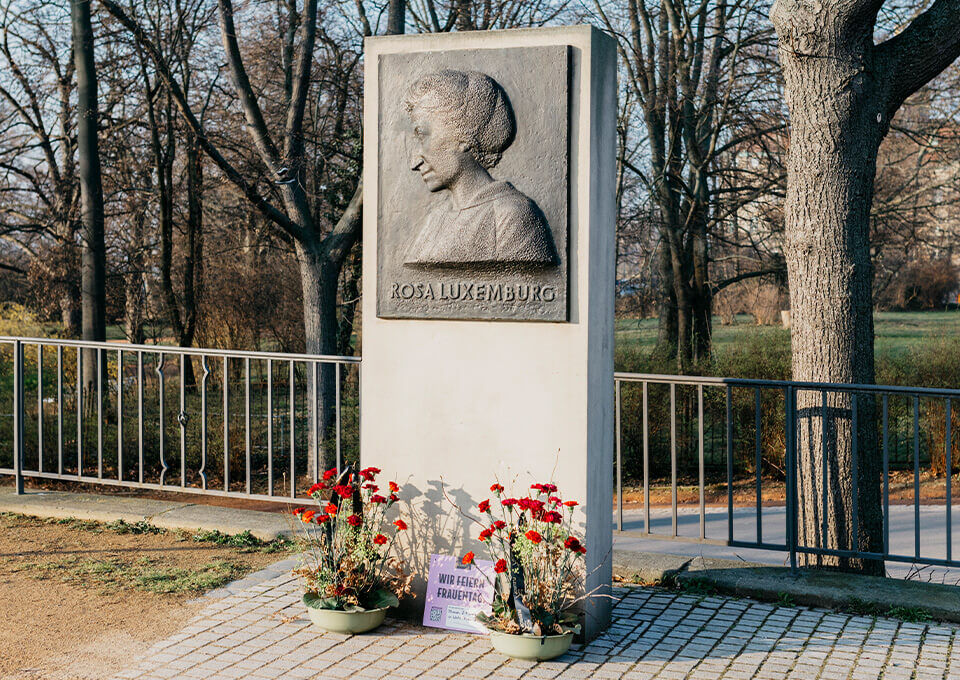
Dresden: Rosa Luxemburg
Rosa Luxemburg (1871-1919) was born into a Jewish family in what was then the Russian Empire (now Poland) and her talent was already evident in her childhood: she learned five languages and taught herself to read and write. She graduated from high school in Warsaw at the top of her class and became politically active early on. Her activities and commitment repeatedly brought her into conflict with the authorities and her public protests against war eventually landed her in prison. She calls for the proletariat to take power and warns of the impending war. Rosa Luxemburg is not even 50 years old and her death marks a tragic end to her life and her revolutionary endeavors.
Decorated by: Blumen & Florales
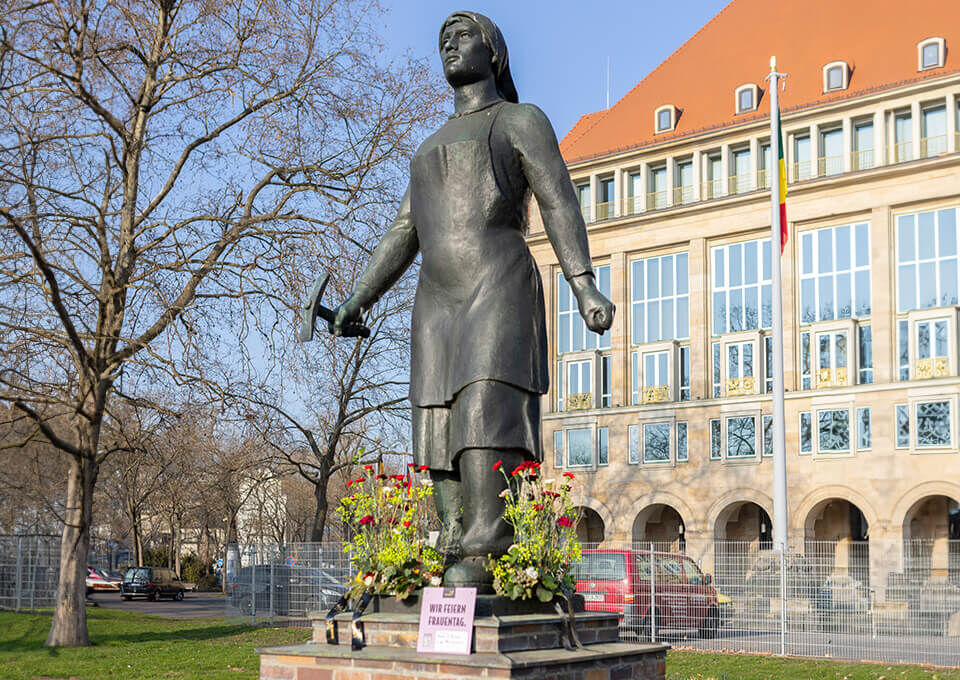
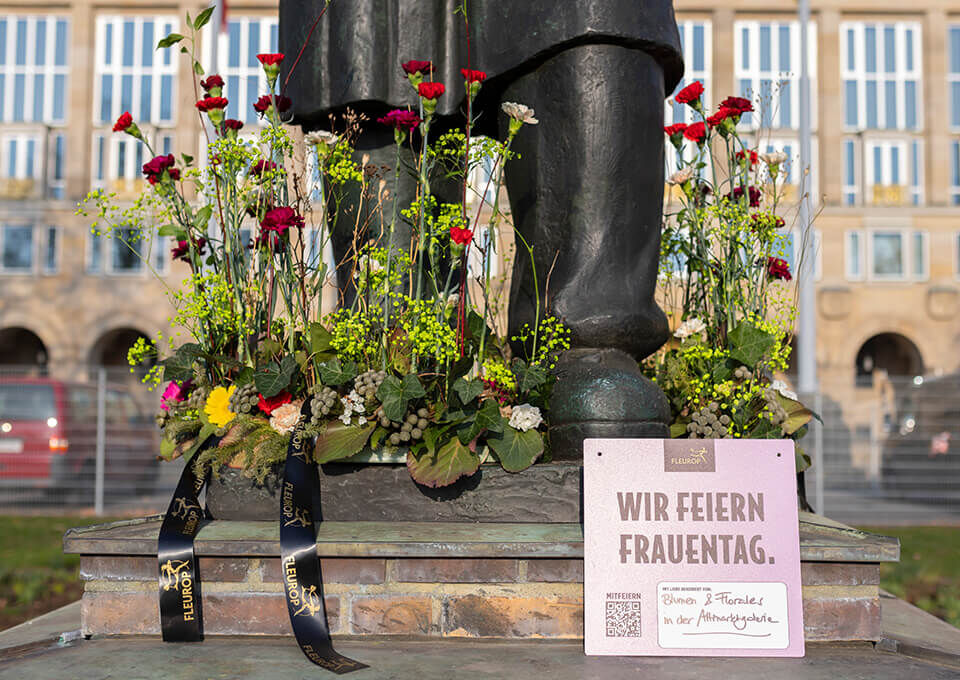
Dresden: Trümmerfrauen memorial
"Now we were suddenly on an equal footing, authorized to do any dirty work. We didn't fight the war, we just lost it. Somehow we were born at the wrong time. We were young, our only luck, that was our bad luck. Because that will never come back. I'm so glad that young people are better off today. So much came - comes - too late for us. Or too early. We were single without a divorce and wore grandma's clothes even then. We were so young and already so spoiled. Our values had died with the people. We crawled to work to avoid dying, but life was really just vegetating." (Peter Ensikat, 1981)
Decorated by: Blumen & Florales
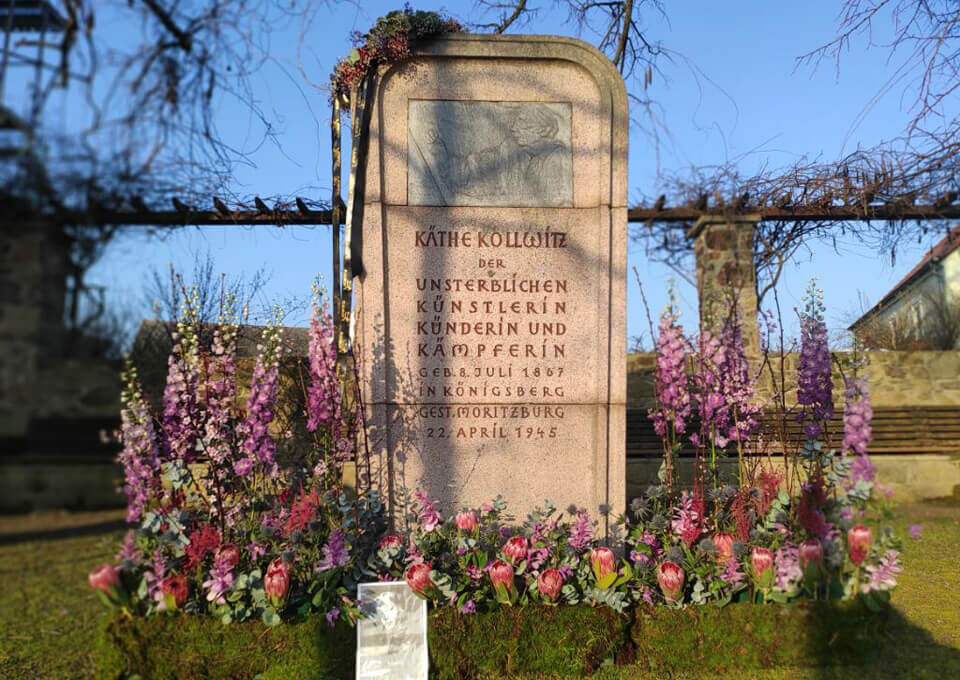
Moritzburg: Käthe Kollwitz
In 1919, Käthe Kollwitz (1867-1945) became the first woman to become a member of the Prussian Academy of Arts and was also appointed professor. With her art and leaflets, she campaigned against post-war hardship, hunger, misery and human loneliness. She also took a stand against National Socialism and after the National Socialist takeover, Käthe Kollwitz was asked to leave the Prussian Academy of Arts.
Decorated by: BlumenMehr
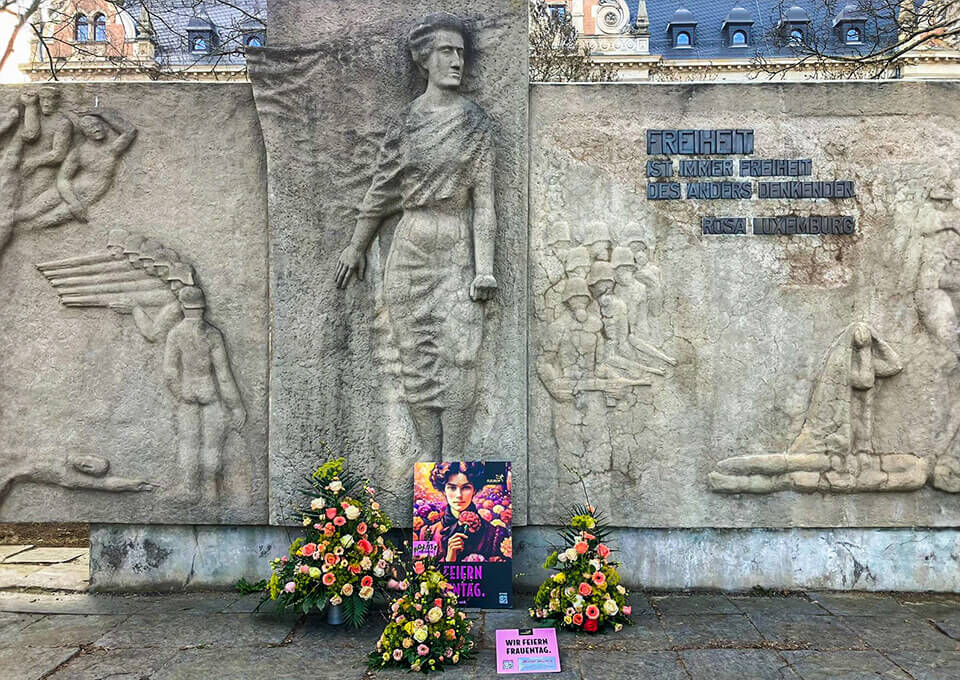
Zwickau: Rosa Luxemburg
Rosa Luxemburg's political commitment to the workers' movement and anti-militarism earned her many opponents. She described imperialism as the great power of all evil and saw world peace in danger. Together with Clara Zetkin and Karl Liebknecht, she founded the Spartacus Group, which later became the Communist Party of Germany (KPD). She criticized the reformist policies of the SPD and campaigned for a revolutionary transformation of society. Among other things, they rejected the idea of a dictatorship of the proletariat. In 1919, the so-called "Spartacus Uprising" was triggered against the transitional government under Friedrich Erbert. Although the Spartacus group only took part after the uprising had begun, Rosa Luxemburg and Karl Liebknecht were hunted down and murdered as leaders.
Decorated by: Blumen Gellrich
In Thuringia
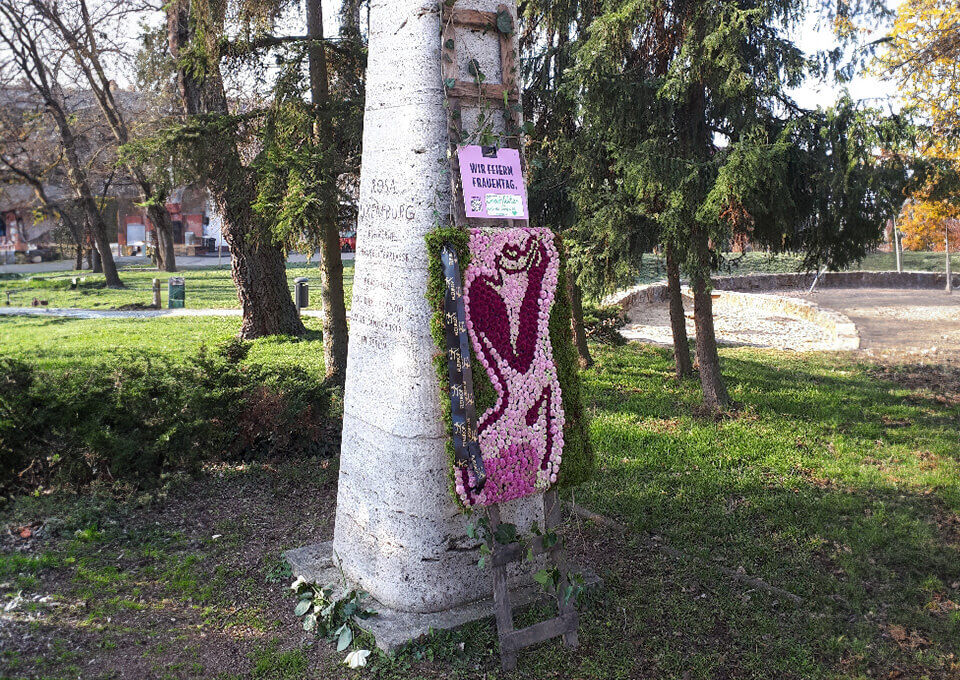
Weimar: Rosa Luxemburg
Rosa Luxemburg (1871-1919) was above all a champion of the workers' movement for those who thought differently. The murder of her and Karl Liebknecht goes down in history and marks a tragic end to her life and her revolutionary aspirations. Most of those involved in these murders were never brought to justice and the officer responsible later claimed that the Reich Chancellery had given him the go-ahead by telephone - although this cannot be proven beyond doubt to this day. Her body was also only found months later. Around 10,000 people follow her funeral procession.
Decorated by: SEELENFUTTER
Are you missing an important statue in your city that you would like us to decorate for Women's Day 2027?
Get in touch with us and, with a bit of luck, this statue will also be decorated by one of our florists for Women's Day next year.
Inspiration & ideas for Women's Day

Women's Day quotes – words that empower, celebrate and unite
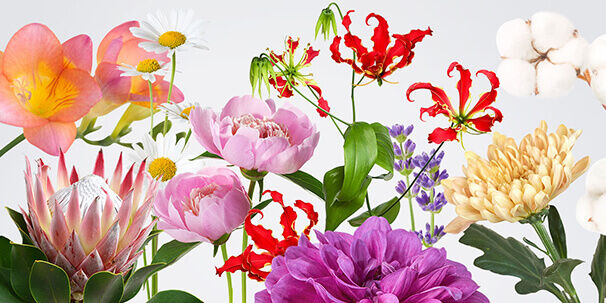
Flowers & Their Meaning

Bake your own heart-shaped cake – recipe idea with strawberries, no heart-shaped pan required

Flower Card DIY Idea - Say Thank You with a Self-Designed Card
Frequently asked questions about Women's Day
International Women's Day takes place every year on 8 March and draws attention worldwide to women's rights, equality and social challenges. At the same time, it is a day to recognise and highlight the achievements of women.
Women's Day stands for equal opportunities, recognition and social change. It highlights structural inequalities and encourages people to take responsibility for greater equality.
Yes, Women's Day has political origins and continues to draw attention to issues such as equal pay, fair working conditions and self-determination for women.
Popular gifts for Women's Day include flowers, personalised cards or small gestures of appreciation. Flowers are considered a timeless symbol of respect, gratitude and recognition – whether for partners, friends or colleagues.
On Women's Day, flowers represent visibility, appreciation and solidarity. They are a positive sign of recognition and underline the message of consciously putting women in the spotlight.
Giving flowers is a symbolic gesture to say thank you and show respect. On Women's Day in particular, flowers help to draw attention to the significance of the day – quietly but effectively.
Flowers on Women's Day are suitable for all the important women in your life – partners, mothers, friends, colleagues or even yourself as a sign of self-esteem.
Yellow flowers are typical as a symbol of strength and hope. However, colourful or spring-like bouquets that express joie de vivre and appreciation are also popular.
In many cities, there are significantly more statues of men than women. Historical role models and a lack of recognition of women's achievements have led to women being underrepresented in the cityscape.
Women's Day can be celebrated consciously by raising awareness, initiating conversations and showing appreciation with small gestures, such as flowers.
Companies use Women's Day to take a stand, promote equality and visibly honour women, both internally and externally.